
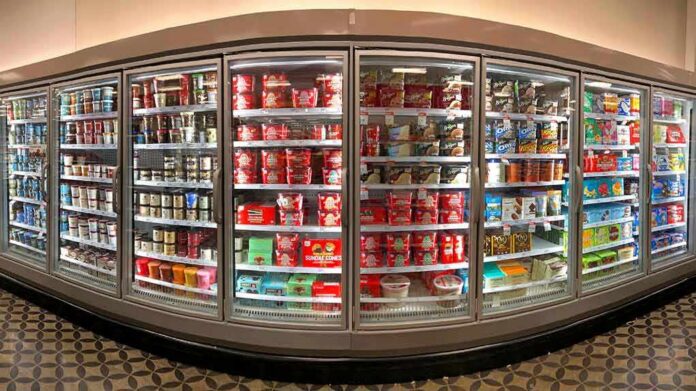
Someone reached into supermarket freezers across three countries and nudged the dial—remotely.
Story Snapshot
- Retailers in Belgium, Luxembourg, and Sweden reported overnight changes to fridge temperatures.
- Stores treated it like a live cyber risk, not a random fault, pulling systems offline.
- France saw a larger, earlier wave that hit hundreds of stores and triggered a probe.
- Investigators have not confirmed a shared culprit or identical equipment across all incidents.
What Happened And Where It Stands
Retailers said refrigeration settings changed without authorization in Belgium, Luxembourg, and Sweden. Ahold Delhaize confirmed tampering with cooling set points in Belgium and Luxembourg. ICA said an overnight issue hit a limited number of Swedish stores. Coop cited problems at six Swedish locations. These reports match a simple, hard-to-ignore pattern: temperatures that should be locked down were raised by someone with remote reach. Authorities are still investigating, and companies have not named a culprit.
France faced a bigger shock weeks earlier. The Paris Prosecutor’s Office opened a cybercrime probe after hundreds of supermarkets saw freezers and fridges pushed out of safe ranges. Multiple chains reported damage and food losses. That event created the template: internet-connected controls, synchronized timing, and physical spoilage from digital commands. The scale in France does not prove the later cases match it, but it shows what this class of attack looks like when it ramps up.
How The Attack Vector Likely Works
Modern supermarkets run cold chains with networked controllers. Many are old, hard to patch, and tied into remote monitoring. Reporting tied the French wave to legacy refrigeration controllers and web dashboards that were reachable and out of date. Security teams in France noted compromises involving known industrial brands and models. That aligns with what specialists have warned for years: long-lived hardware with weak remote access is prime ground for mischief with real-world impact. Older gear invites trouble when left exposed and unmanaged.
Operators acted like they were under remote fire, not just battling a compressor fault. One French store leader said teams shut down and disconnected systems to kill any path for another push of rogue commands. That response fits a scenario where attackers ride in through old web interfaces, default passwords, or vendor backdoors. It also explains why stores in the newer cases moved fast, kept statements tight, and let investigators dig through access logs before assigning blame.
What We Know, What We Don’t
Public evidence supports unauthorized temperature changes. Retailers with the most at stake used careful language. They called it an information technology incident while they checked the logs and hardware. They did not confirm that the same person or group hit every chain. They did not name the specific controllers in Belgium, Luxembourg, or Sweden. Officials and outlets have said no technical link to the French wave has been proven so far. That is prudent. It does not weaken the core fact of remote changes, but it keeps attribution honest.
Imagine walking into a supermarket and discovering that its freezers have been remotely turned into ovens. 😳
That's reportedly what happened in Sweden, following similar cyberattacks on supermarkets across Europe
And this raises a much bigger question about the Internet of…
— sattvik (@Sattv1k) November 3, 2026
American conservative common sense says fix the basics before the next crisis. Do not wait for a fancy forensics brief to lock down old control panels. If a freezer can be flipped from afar, treat that port like a front door. Remove public access. Require strong logins. Update firmware where possible. Replace dead-end legacy boxes on a schedule. Keep vendor support accounts on short leashes. The French case shows the cost of delay, in real dollars and wasted food.
Why This Matters Beyond Groceries
Operational tech is everywhere—heating, ventilation, lighting, pumps, alarms. These systems were built to run for decades, not fend off today’s attackers. When businesses put them on the internet to save a truck roll, they inherit a new duty of care. Threat actors love control systems because one small change creates big, visible pain. The French wave proved that point. The three-country flare-up proves it is not a one-off. This is what a soft underbelly looks like in a connected economy.
Policy and insurance must catch up. Clear standards for remote access, maintenance, and life-cycle replacement will raise the floor. Insurers should reward segmented networks, modern controllers, and audited access. Regulators should demand simple, checkable steps, not binders. Boards should treat cold-chain uptime like cash flow, because it is. You cannot hedge rotten inventory. You can, however, close the open window that lets a stranger touch the thermostat from a continent away.
Sources:
insiderpaper.com, apnews.com, dutchnews.nl, cphpost.dk, people.com, independent.ie, occrp.org, bloomberg.com