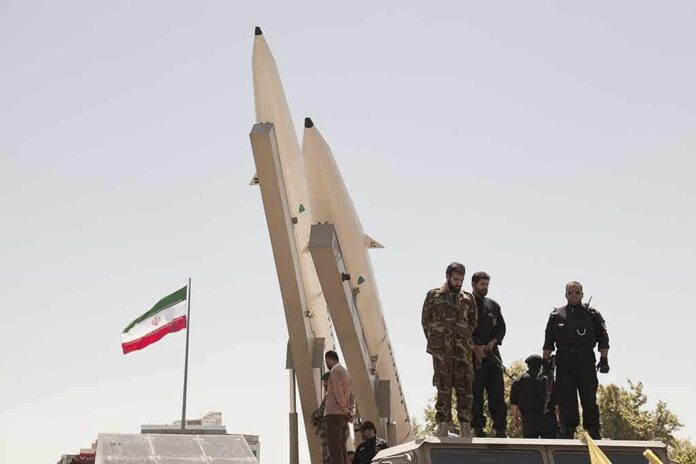
U.S. fighter jets hit an Iranian missile site on Qeshm Island after attacks on American personnel and assets, signaling firm self-defense without a push for wider war.
Story Highlights
- U.S. aircraft struck an Iranian missile-launch site on Qeshm Island in declared self-defense.
- Officials framed the action as limited and not a step toward major combat.
- Iran-linked fire hit Gulf targets after the strike, showing the fight is ongoing.
- The site sits near the Strait of Hormuz, a key energy and shipping lane.
U.S. Strike Targets Missile Site Tied to Threats
U.S. military aircraft struck an Iranian missile-launch site on Qeshm Island on November 17. A U.S. military official said the strike answered Iranian targeting of U.S. personnel and assets. The location matters. Qeshm sits by the Strait of Hormuz, where a missile threat can endanger American forces and global shipping. The strike followed earlier U.S. action this month aimed at stopping surface-to-air missile use against American aircraft in the region.
Reports tied the November 2 operation to the same defensive goal. Officials described that earlier action as countering Iranian air defenses that could threaten U.S. drones or planes operating lawfully in international airspace. Together, the two actions point to a pattern: hit specific launch or air-defense nodes that put American service members at risk, then step back from broader escalation. That narrow focus is central to how the administration characterized the operation.
Administration Frames Response as Limited Self-Defense
U.S. officials emphasized the November 2 and November 17 operations were limited, precise, and aimed at restoring deterrence. One official said the earlier strike did not mark a return to major combat. Another said the goal was to stop Iranian air-defense threats to U.S. assets. That framing fits long-standing U.S. policy: act to protect Americans, avoid unnecessary escalation, and keep sea lanes open near Hormuz. The Pentagon referred detailed questions to U.S. Central Command.
Iran’s narrative differed on outcomes but confirmed activity on Qeshm occurred. Iranian and regional reporting carried statements from a provincial official claiming no damage to infrastructure from the November 17 events. That claim focused on civilian areas and services, not the military sites the United States said it targeted. Such dueling descriptions are common in limited strikes, but they do not change the U.S. stated purpose: stop threats to American personnel and gear.
Regional Fallout Shows Ongoing Risk Near Hormuz
Regional tensions did not stop after the U.S. action. Reuters reported Iran-linked fire at targets in Kuwait following the Qeshm strike, while Gulf states warned residents to shelter from possible threats. Those events underscore the stakes. The Strait of Hormuz carries a large share of the world’s oil and fuel. Any surge in missile or drone attacks near that chokepoint can rattle markets, raise pump prices, and endanger U.S. ships and bases.
Washington and partners continue diplomacy to contain the fight. Reuters reported regional players, including Qatar, prefer restraint and are engaged with both Washington and Tehran. That diplomatic push sits alongside the U.S. military’s narrow strikes. The message is clear: defend American troops and assets, keep trade flowing, and avoid a larger war. Whether Tehran backs down will shape risk to energy costs and U.S. forces in the weeks ahead.
Why This Matters to American Families
American families feel rising prices fast when Middle East shipping comes under threat. Missiles near Hormuz can choke fuel supply and spike costs at home. President Trump’s team signaled that the United States will hit real threats but keep the mission limited. That balance protects our troops, our wallets, and our energy security. Clear, defensive action backed by diplomacy is the right mix to stop attacks without giving Iran a propaganda win or risking a wider war.
What to Watch Next
Watch for proof of reduced Iranian air-defense activity near Qeshm. Look for fewer drone or missile shots at U.S. assets and bases. Follow shipping data for delays or diversions near the strait. Track statements from U.S. Central Command that confirm continued freedom to operate safely. Also watch Gulf partners’ alerts. If warnings ease and traffic flows smoothly, the limited-strike message is working. If Iran fires again, expect more precise U.S. action to protect American lives.