
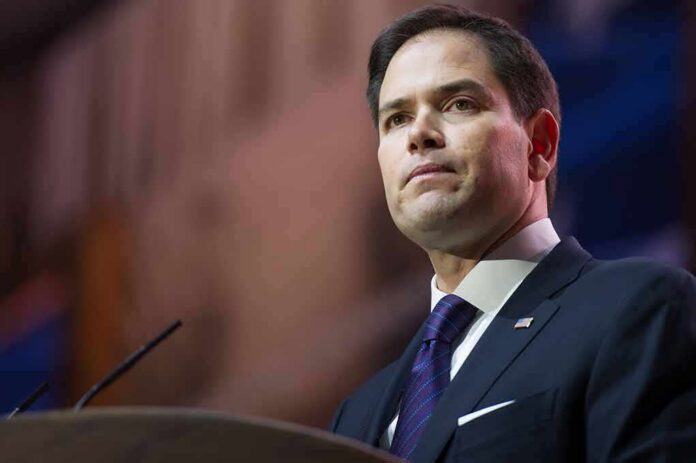
Asked point-blank about a dirty-bomb plot against Washington, Secretary of State Marco Rubio said he saw no imminent threat—and he said it without hedging.
At a Glance
- Rubio said there is no imminent threat to Washington and expressed confidence in U.S. intelligence systems.
- CNN’s own report framed Iran’s activity as building options, not signaling an immediate attack.
- The White House said there were no credible threats to the homeland at that time.
- Officials reportedly disagreed on Iran’s capability and intent, underscoring a murky picture.
Rubio’s Clear Denial Anchored The Public Line
Rubio faced the question in Manila on November 18 and answered, “I am not,” when asked if he feared an imminent attack on Washington. He added, “I don’t think there’s any imminent threat.” He grounded the answer in daily threat vetting and confidence in U.S. intelligence. He said many reported “threat streams” do not pan out, and he trusts the systems that flag real danger ahead of time. That set a crisp public baseline for risk.
CNN’s report two days earlier raised alarms with talk of a possible dirty bomb in Washington. Yet its sources also said the activity looked like contingency planning by Tehran, not a green light for an attack. The article said officials even debated whether Iran had the people in place to act and that there was no evidence Iran had decided to proceed. That framing supports Rubio’s narrow claim about imminence while leaving other questions open.
The White House Message Matched The No-Imminence Assessment
The White House said it was monitoring all potential threats but saw no credible homeland threat at that time. That statement echoed CNN’s description that U.S. officials had not assessed an immediate danger and that planning did not equal a pending strike. When the executive branch aligns on a single line—watchful but calm—it signals a shared read of the classified picture. That also matters for agency posture and public trust.
Iran publicly denied the plot. Tehran’s statements called the claims false and propaganda. Those denials add little beyond predictable positioning, since adversaries rarely confirm covert intent. They do, however, feed public doubt in the absence of released proof and stress the need for careful sourcing. The CNN piece relied on seven unnamed officials, which magnifies the stakes for editors and for readers sorting signal from noise.
Specifics Without Imminence Create A Knife-Edge Dilemma
Detailed reporting on targets and logistics sounds urgent, even if the same report says “not imminent.” That paradox is the heart of modern warning. Policymakers must sort fragments that often never lead to action from those that do. History shows repeated false alerts dull the senses, while ignoring real ones invites disaster. Rubio leaned on the system’s filters. That squares with a conservative instinct: take threats seriously, but do not panic the country without hard triggers.
Reuters: Threats from Iran to Americans inside and outside the United States have increased substantially, Director of National Intelligence Jay Clayton told lawmakers on Wednesday. “We remain committed to detecting, deterring, and combating the Iranian lethal plotting outside…
— Alexport (@AlexAlexx974431) November 19, 2026
Rubio’s answer also dodged a trap. He did not vouch for every detail in the reporting. He stuck to imminence, where the record backed him. He pointed to confidence in intelligence and daily triage. That choice avoided claiming the leaks were fabricated or criminal—charges not supported by the public record here. It also respected classification lines. If later facts change, officials can adjust posture without walking back a reckless promise.
What Matters Next For Public Confidence
Three tests now matter. First, do protective agencies sustain a normal posture with targeted vigilance, which would match the no-imminence view. Second, do declassified updates confirm that planning stayed at the “options” stage rather than moving to operational steps. Third, do officials converge further on capability and intent. Clarity on those points would turn this from a headline-grabbing scare into a case study of the system working as designed—alert, disciplined, and calm.
Sources:
mediaite.com, washingtonexaminer.com, iranintl.com, cnn.com