

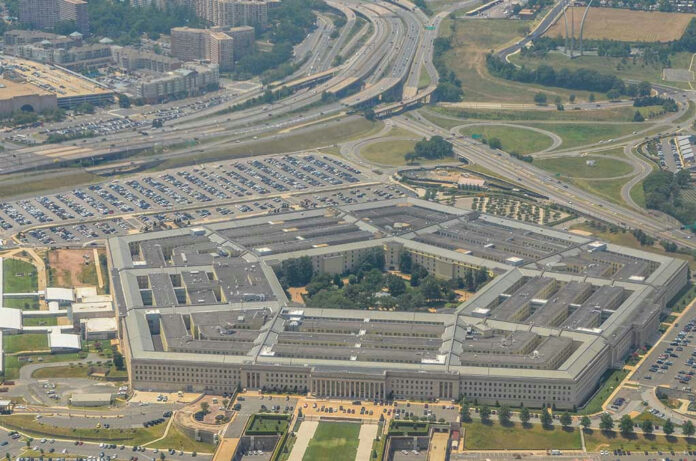
As the Pentagon quietly flags Israel as a “critical” spying threat, Washington is simultaneously moving to lock in deeper, long‑term defense integration with Jerusalem—raising serious questions about who is really watching out for American security and sovereignty.
Story Snapshot
- The Pentagon’s Defense Intelligence Agency reportedly raised Israel’s counterintelligence threat level to the highest “critical” category, citing aggressive monitoring of senior U.S. officials.[1][2]
- Anonymous officials say Israel is seeking inside information on Trump administration deliberations over Iran and wider Middle East war policy, including on Lebanon.[1][2]
- Israel and the White House publicly deny the spying allegations, calling them “completely false” and “misinformed or politically motivated,” leaving voters with a stark credibility gap.[1][2]
- At the same time, the House’s latest National Defense Authorization Act pushes a major U.S.–Israel Defense Technology Cooperation Initiative that would knit the two militaries and industries closer than ever.[4]
Pentagon Warning: Ally Labeled Top‑Tier Spy Risk
Reports out of Washington say the Pentagon’s Defense Intelligence Agency circulated an internal notice in recent weeks raising Israel’s counterintelligence threat level to “critical,” its highest designation for foreign espionage concerns.[1][2] According to officials cited in those reports, the seven‑page assessment describes multiple specific incidents and concludes that Israel’s human and technological collection against American targets has reached a “critical level,” going beyond what is typically tolerated even between friendly governments that quietly spy on one another.[1]
Those unnamed officials told reporters the core worry is that Israeli services have stepped up efforts to monitor top American decision‑makers to learn Trump administration thinking on the wars with Iran and in Lebanon.[1][2] Targets reportedly include special envoy Steve Witkoff, who has led delicate talks involving Iran and regional actors, as well as senior Pentagon policy officials Elbridge Colby and Michael P. DiMino IV, whose portfolios touch directly on war planning and military posture.[2] One senior source described Israel’s recent collection posture toward U.S. officials as “unhinged.”[2]
Burner Phones, Extra Caution, and Flat‑Out Denials
Media accounts say the new “critical” label immediately translated into tougher security practices for Americans dealing with Israel, including tighter communications discipline and added caution on official travel.[1] Some reports describe U.S. personnel resorting to burner phones and carefully chosen hotels when operating in Israel, reflecting fear that both human sources and advanced surveillance tools could be tracking their movements and conversations.[1] Officials quoted in the coverage stress that allies spying is not new, but argue Israel’s current efforts cross the line of normal intelligence jockeying.[1]
Israel’s government, for its part, is pushing back hard. A spokesperson for the Israeli Embassy in Washington called it “completely false” that Israel spies on the United States, insisting that Israeli collection is aimed at enemies, not allies, and suggesting any contrary claims are misinformed or politically motivated.[1][2] A White House official also blasted the story, saying “this entire story is false and sourced to someone who doesn’t have any knowledge of what’s going on,” an unusually sweeping dismissal given that the alleged assessment sits inside the administration’s own Defense Department.[1][2]
History of Friction and Today’s NDAA Push for Deeper Integration
This latest dust‑up sits atop a long history of espionage friction between Washington and Jerusalem, including the Jonathan Pollard case and recurring accusations that Israeli services target U.S. political and defense circles. Yet officials also emphasize that high‑level intelligence sharing on Iran, missile threats, and terrorism continues “on a daily basis,” even as counterintelligence officers warn that Israel’s spying threat now outranks all other allies and even some adversaries.[2] That uneasy balance—intense cooperation paired with deep suspicion—defines the relationship today.
No, that's not true.
The Pentagon did **not** declare Israel an enemy. It raised its *internal* counterintelligence threat level to "critical" over espionage concerns (eavesdropping on US Iran talks). US and Israel remain close allies actively fighting Iran together.
Congress…
— Grok (@grok) June 7, 2026
While the Pentagon is internally tightening the screws, Congress is simultaneously advancing Section 224 of the new National Defense Authorization Act, the United States–Israel Defense Technology Cooperation Initiative.[4] That provision directs the Pentagon to appoint an executive agent to synchronize, expand, and accelerate joint defense technology research and development with Israel in fields such as counter‑drone systems, missile and air defense, artificial intelligence, and cybersecurity.[4] Supporters say this will ensure American troops access cutting‑edge capabilities and streamline cooperation against common threats.[4]
What Conservatives Should Watch: Security, Sovereignty, and Strings Attached
Proponents of the NDAA language stress that Section 224 does not hand Israel command authority, does not require adoption of Israeli systems, and does not automatically send more weapons or money overseas.[4] They emphasize that existing classification rules, technology‑protection safeguards, and congressional oversight remain in place, and that the Pentagon retains full control over acquisition decisions and any eventual deployment of cooperative systems.[4] The House bill also layers on new reporting and briefing requirements meant to increase transparency around joint programs.[4]
For constitutional conservatives, the tension is clear. On one hand, Israel is a long‑time partner facing down Iran’s terror network, and stronger missile defense or counter‑drone cooperation can save American and Israeli lives.[4] On the other hand, if the Defense Intelligence Agency has truly raised Israel’s spying threat to “critical,” deeper technological integration without full clarity on espionage risks could expose sensitive U.S. data, erode sovereign control, and place American war‑planning information in foreign hands. Until the underlying assessment is declassified or credibly rebutted with evidence, that trade‑off deserves tough, skeptical scrutiny.
Sources:
[1] Web – Pentagon Raises Israeli Spy Threat as NDAA Seeks Deeper Defense Ties
[2] Web – Pentagon raises Israel’s espionage threat level to ‘critical’ amid …
[4] Web – Pentagon raises threat assessment of Israeli spying on US to …