
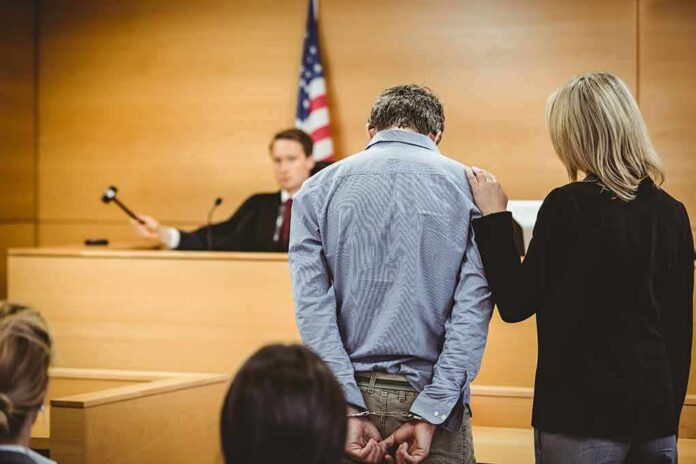
A military judge has thrown out the confession that prosecutors called their most important evidence against the man accused of masterminding the September 11 attacks, pushing his trial nearly 27 years past the crime.
Quick Take
- A military judge ruled Khalid Sheikh Mohammed’s 2007 FBI confession was not given voluntarily and cannot be used at trial.
- The judge said the FBI questioning was tied to an “unbroken continuation” of earlier CIA torture and coercion.
- Agents reportedly failed to tell Mohammed he had the right to stay silent and talk to a lawyer.
- The trial is now set for June 2028, nearly 27 years after the attacks, with key evidence fights still unresolved.
Judge Rejects Confession Prosecutors Called Central
Military judge Michael Schrama ruled the government failed to prove Mohammed’s 2007 statements to Federal Bureau of Investigation (FBI) agents were voluntary. Prosecutors had leaned on those statements as their strongest proof tying Mohammed to planning, training, and funding the 2001 attacks. Multiple news outlets had reported the government viewed the 2007 interviews as its most crucial evidence in the long-running case.
Federal Bureau of Investigation agents questioned Mohammed at Guantanamo Bay in January 2007, months after he was moved out of Central Intelligence Agency custody. In a documentary segment, one agent said Mohammed admitted involvement in “planning, training operatives, and securing funding for the attacks” and said he was “proud of what he did”. That testimony shows why prosecutors fought so hard to keep the statements in front of a jury.
Torture Record Follows the Case Into 2007
Schrama’s ruling did not treat the FBI interviews as a clean break from what came before. He wrote the questioning represented “the unbroken continuation of the CIA’s psychological conditioning and severe coercion,” according to court records cited in news reports. Mohammed had reportedly been waterboarded 183 times while in Central Intelligence Agency custody, a detail that has shadowed the case for years and now anchors the judge’s decision to toss the confession.
The ruling also found a separate problem with the FBI’s own conduct. Agents reportedly failed to explicitly tell Mohammed he had the right to remain silent or to talk to a lawyer before he spoke. That gap matters because prosecutors needed to show the confession met basic voluntariness standards, not just that time had passed since the CIA interrogations ended.
Trial Pushed to 2028 as Fights Continue
A separate order set Mohammed’s trial date for June 5, 2028, giving both sides more than a year and a half to resolve outstanding disputes over what evidence can go before a jury. The delay stretches a prosecution that began not long after the 2001 attacks into its third decade, a timeline that has frustrated victims’ families and fueled questions about whether the military commission system at Guantanamo Bay can deliver a resolution at all.
Defense lawyers have argued for years that years of CIA coercion conditioned Mohammed to simply tell FBI agents whatever they wanted to hear, regardless of who was in the room. The judge’s ruling lines up with that argument, finding the government could not separate the later questioning from the earlier abuse. Prosecutors can appeal the decision, which would extend the uncertainty even further.
“A military judge threw out a confession of Khalid Sheikh Mohammed, the alleged mastermind behind the September 11, 2001 attacks, ruling his confession was not provided voluntarily. The confession was made to an FBI team in 2007 at Guantanamo Bay, Cuba, years after Mohammed had…
— Disa Sacks (@SacksDisa) August 31, 2026
The case now sits at an uncomfortable point for both sides of the political spectrum. Conservatives who want swift justice for a mass-casualty attack see another delay in a system that has struggled for decades to reach a verdict. Liberals concerned about government overreach see confirmation that torture tactics used after 2001 have permanently damaged the government’s ability to prosecute even the most notorious suspects through normal legal channels.
Sources:
military.com, justthenews.com, en.wikipedia.org, ktemoc.blogspot.com, nytimes.com