

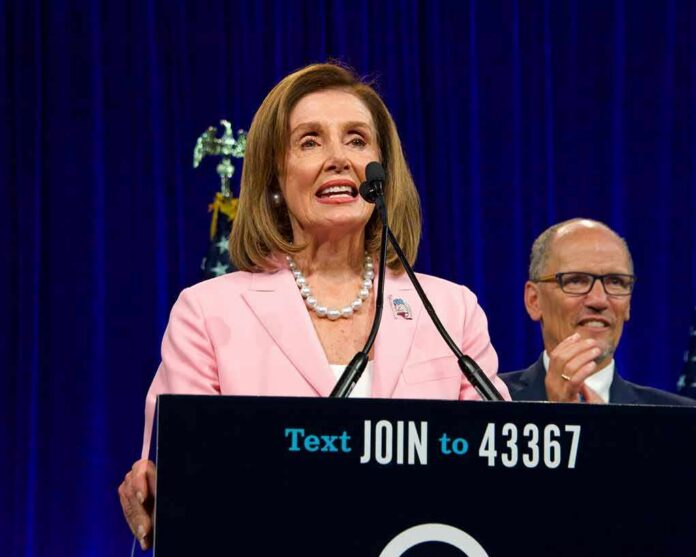
Nancy Pelosi publicly rejected two Democrats’ Israel remarks as “wrong,” spotlighting a widening rift over core party values and U.S. alliances.
Story Snapshot
- Pelosi said comments by Zohran Mamdani and Abdul El-Sayed on Israel are “wrong” and not reflective of House Democrats.
- Mamdani backs Israel’s existence with equal rights but declines to support it as a Jewish state.
- El-Sayed questioned whether Israel is a true U.S. ally and criticized American aid.
- The clash shows a larger Democratic divide over Israel, aid policy, and party identity.
Pelosi’s On-Record Rebuke And Why It Matters Now
On October 29, former House Speaker Nancy Pelosi said remarks by Zohran Mamdani and Abdul El-Sayed on Israel are “wrong” and do not represent Democrats in Congress. She made the comments during an interview in which antisemitism concerns and party boundaries were raised. Her words carried weight because they drew a sharp line on what Democratic leaders see as acceptable positions. The statement also arrived as campaigns amplify Israel policy disputes to test party identity and voter trust.
Pelosi’s framing underscored a tension many voters feel: politicians speak for themselves, not always for a party. She did not cite a caucus vote or a formal House statement, so her judgment stood as her own authority rather than a measured survey of members. That gap leaves room for interpretation and for rivals to spin her remarks. Still, given her stature, the signal to candidates and donors was clear: these particular comments crossed a line for party leadership.
What Mamdani Has Said About Israel And Equal Rights
Zohran Mamdani has said he supports Israel’s right to exist but “as a state with equal rights,” and he has declined to endorse Israel as a Jewish state. He frames the position as a universal rule against states that privilege one religion over others, citing Israel and Saudi Arabia as examples. Supporters say this is a rights-based stance. Critics argue it dismisses Jewish self-determination. The difference between “a Jewish state” and “a state with equal rights” drives much of the debate.
Reports describe Mamdani repeating this view in interviews and declining to affirm Israel’s right to exist specifically as a Jewish state, even while saying Israel should exist as a state with equal rights. That nuance is central. Opposing religious privilege is not the same as denying Israel’s existence. But in today’s climate, short quotes become symbols. Headlines travel faster than context. That makes it easy for opponents to portray his argument as broader rejection, and for allies to claim unfair framing.
El-Sayed’s Challenge To The U.S.-Israel Alliance
Abdul El-Sayed has argued that Israel should not be treated as a U.S. ally, saying it takes American money and pulls the United States into wars it should not fight. He has pushed to end U.S. military aid to Israel and has used harsh language to describe Israel’s actions, aligning with a left-wing camp that favors deep aid conditions or a cutoff. These claims clash with long-standing bipartisan habits on aid, even as many Americans now question foreign commitments and endless spending.
Nancy Pelosi & Donny Deutsch on Israel and antisemitism in the Democratic Party
Donny: It feels like a wing of the party has just abandoned Israel and has tones of antisemitism. It's upsetting as a Jewish man.
Pelosi: I really do not know of anybody there on our side who…
— It's politics (@uspolitics1111) October 30, 2026
Reports also say El-Sayed struggled to affirm Israel as a Jewish state, tying that concept to values he says conflict with liberal ideals in the United States. This framing appeals to voters who want a simple rule: equal rights for all, everywhere. But it alarms those who see Jewish nationhood as a response to history and a core part of Israel’s identity. That tension maps onto a larger struggle inside the party over where critique ends and delegitimization begins.
Why This Fight Resonates Beyond One Party
These disputes echo common frustrations across the spectrum. Many Americans think Washington elites talk past real problems while sending tax dollars abroad. Voters worry about rising costs at home, broken borders, and a foreign policy that feels on autopilot. Pelosi’s line-drawing shows Democrats wrestling with identity, while Republicans press an America First approach under President Trump. Both sides claim to defend core values, yet voters still see a system that fails to deliver results.
The deeper story is about trust. People want leaders who state clear principles, show the math on aid, and explain how choices make America safer and freer. Pelosi’s rebuke tries to set boundaries. Mamdani and El-Sayed push an equal-rights lens and a tighter view of alliance. Voters will judge which path guards American interests and moral commitments. Until leaders back claims with transparent policy and costs, suspicion of the political class will keep growing.
Sources:
news.meaww.com, foxnews.com, jewishinsider.com, ff.org, thehill.com, mediaite.com