
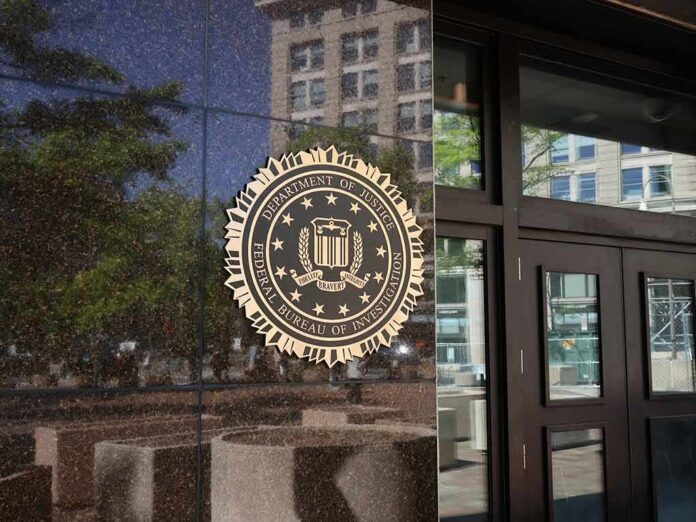
Current and former Federal Bureau of Investigation (FBI) officials say they fear agents could be told to seize ballots or voting machines, raising alarms about federal power over local elections.
Story Snapshot
- Seven people familiar with FBI discussions reported fears of orders to seize ballots or machines.
- A January 2026 Fulton County warrant led agents to remove large volumes of election records.
- FBI Director Kash Patel did not rule out agents at polling places during Senate questioning.
- Independent legal analysis says emergency powers do not authorize seizing voting equipment.
What FBI Officials Reported They Fear Could Happen
MS NOW reported that seven people familiar with internal FBI discussions said agents worry they could be ordered to seize voting machines or ballots based on weak fraud claims. Former FBI supervisory special agent Rob D’Amico stated that he and others fear the bureau could be used to issue warrants on “questionable probable cause” to grab election materials. The report frames these concerns around possible Election Day deployments and post-election actions that could disrupt local counting and certification.
Coverage in other outlets amplified the account, saying some agents fear being pulled into moves that could cause chaos at the polls or during the canvass. The Detroit News outlined how court-approved subpoenas or warrants could interrupt normal chain-of-custody and delay counting, even if the actions were presented as routine law enforcement steps. The reporting does not identify a signed directive or a specific District of Columbia warrant, but it details concrete scenarios agents discussed.
A Recent Seizure That Shapes Today’s Concerns
Reuters reported that federal agents seized ballots and other election records from Fulton County, Georgia, in January 2026 under a court warrant. Reporting described hundreds of boxes of ballots and related materials being removed as part of that action. While that case turned on a judge’s order, it showed how federal steps can sweep up core election records. Analysts say that kind of seizure can stress chain-of-custody procedures and slow certification timelines when it occurs near an election.
The Fulton County episode is not the same as a sweep at live polling places, and the legal theories may differ. Still, the visible result was the same: federal agents took control of sensitive election material under color of law. That fact is driving new worries among agents and election officials about how quickly legal tools can reach into local election rooms when fraud claims arise, even before a court reviews the full basis in a contested hearing.
What The FBI Director Told Senators About Polling-Place Deployments
During a Senate Judiciary Committee hearing in September 2026, FBI Director Kash Patel said the bureau stationed election-crime coordinators in all 56 field offices and would not rule out agents going to polling places if there was a legal reason to do so. Patel said, “I don’t know that we can’t legally do it,” while stressing that most work would stay based in field offices. The exchange signaled that on-scene deployments could occur under certain conditions.
That stance differs from a flat ban and adds weight to agents’ reported concerns. It aligns with the view that federal involvement in election spaces is unusual, narrow, and supposed to be justified by specific facts. But it also confirms the door is open if officials claim a violation at a site. In a heated environment, that opening can invite rapid moves that collide with local procedures and public expectations about neutral counting.
What The Law Allows—and What It Doesn’t
The Brennan Center’s legal analysis says presidential emergency powers do not give clear authority to seize voting machines or station troops at polling places. The report examined the International Emergency Economic Powers Act and a 2020 draft order and concluded that these tools would not lawfully support federal control over election equipment. That guidance places limits on sweeping federal actions. It also suggests that any federal reach into elections would need standard criminal process or specific statutory authority.
Even with such limits, warrants and subpoenas can still place federal agents near ballots and machines. That is why the mechanism matters. A court order can look proper on its face while still causing major disruption to local counts, chain-of-custody, and certification timing if executed at the wrong moment. For citizens across the political spectrum—left, right, and independent—the shared concern is simple: powerful institutions should not bend election rules to serve politics or protect elites over voters.
Why This Matters Beyond One News Cycle
American elections have long been run by local officials with minimal federal intrusion. History shows that heavy federal involvement was rare and tied to distinct civil-rights needs, not to claims of fraud that shift with the news. Today’s reports show how fast legal tools, political pressure, and national security language can push federal power into local election rooms. That arc worries people across parties who already feel Washington serves itself before the public.
Clear guardrails, prompt transparency, and steady communication can reduce risk. Congress and the courts can define when, how, and why agents may access election materials during live processes. The Department of Justice and the FBI can publish election-period guidance and after-action reports. Local election offices can document chain-of-custody and certification steps in real time. These basics protect honest counts, deter abuse, and help every voter believe the outcome reflects the ballots that were cast—no more, no less.
Sources:
mediaite.com, reuters.com, rawstory.com, democracydocket.com, alternet.org, thedailystar.net, brennancenter.org, inquirer.com