

When a $267 million hospice scam can bleed Medi-Cal dry for years before anyone in power notices, it confirms what many Americans already fear: the system is wide open for insiders and criminals while ordinary taxpayers and patients get left holding the bag.
Story Snapshot
- California officials say a fake-hospice ring stole roughly $267 million from Medi-Cal using stolen identities and sham companies.
- Prosecutors describe a wider pattern of bogus hospice providers, fabricated records, and kickbacks targeting federal health programs.
- The alleged scam thrived inside a Medicaid system both parties say they support but neither seems able to police effectively.
- Taxpayers on the left and right see another example of elites and fraudsters exploiting a bloated, unaccountable health-care bureaucracy.
How a $267 Million Hospice Scheme Exploited Medi-Cal’s Weak Spots
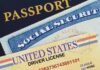
California Attorney General Rob Bonta announced that state investigators dismantled a Los Angeles-based hospice fraud ring that allegedly defrauded Medi-Cal of approximately $267 million.[2] According to the state’s complaint, the network bought personal data for non-California residents on the dark web, used Covered California to enroll them in Medi-Cal, and then billed hospice care for patients who never received a single visit.[2] Officials say fourteen hospice companies were placed in the names of “straw” owners to disguise who was really in charge.[2]
State investigators report that “no hospice services were ever rendered,” yet the companies kept collecting daily hospice payments as if terminally ill patients were being cared for around the clock.[2] The California Department of Justice says the operation, dubbed “Operation Skip Trace,” led to charges against twenty-one suspects, with five arrests, ten to twelve search locations, and the seizure of more than $757,000 in cash and two handguns.[2] Those charged face counts including conspiracy to commit health-care fraud, health-care fraud, money laundering, and identity theft, plus sentence-enhancing allegations for large-scale white-collar crime.[2]
Federal Crackdown Reveals a Bigger Pattern in Hospice Fraud
Federal prosecutors in the Central District of California separately announced a coordinated health-care fraud takedown involving eight arrested defendants, including owners of hospice providers.[6] The federal case alleges that some hospices billed Medicare for patients who were not terminally ill, using medically unnecessary services and kickbacks to drive referrals.[6] Prosecutors say certain defendants knowingly created fake client notes and submitted false claims to government health programs, seeking more than $50 million in reimbursements.[6] Broadcast coverage echoed these allegations, citing fake records, non-existent offices, and stolen identities.[5]
Similar hospice cases in California have not just ended in press conferences but in convictions and prison time, underscoring that this is not a one-off scandal.[6] The Office of Inspector General for the Department of Health and Human Services reported that the owner of two California-based hospice companies, along with a biller and consultant, were sentenced for stealing more than $9 million from Medicare through false hospice claims.[6] California’s own justice department has said it has been pursuing hospice fraud for decades, reflecting a recurring pattern where hospice licenses, shell entities, and vulnerable patients become tools for extracting money from taxpayer-funded health programs.[2][6]
Why This Case Fuels Distrust Across the Political Spectrum
Operation Skip Trace highlights a core frustration shared by both conservatives and liberals: a massive government program that can be gamed for years before anyone notices.[2][3] According to the California Attorney General’s account, the scheme depended on stolen identities, shell hospice companies, and a bureaucracy that kept paying claims without confirming whether real patients in California were actually receiving end-of-life care.[2][3] The use of straw owners and a web of companies to hide the true operators reinforces fears that sophisticated actors know how to navigate — and exploit — government systems better than regulators do.[2][3]
🚨LARGEST MEDI-CAL FRAUD CASE IN CALIFORNIA HISTORY?
A 66yo Orange County man pleaded guilty to wire fraud after stealing nearly $180 million from California’s Medi-Cal program.
Paul Randall and his accomplices, including a pharmacist and nurse practitioner, submitted more than… pic.twitter.com/YJA964mp4n
— NewsForce (@Newsforce) June 2, 2026
At the same time, the public record is still built largely on government press releases and early-stage complaints, not yet on full trials or publicly released evidence files.[2][6] The available documents do not clearly identify which particular arrested individuals, if any, orchestrated the entire $267 million Medi-Cal scheme, as opposed to participating in parts of it.[2][6] This gap feeds broader skepticism: many citizens worry that huge dollar amounts are touted before the evidence is fully aired, while others see the size and repetition of these cases as proof that health-care fraud has become a structural feature of an overwhelmed, poorly supervised system rather than an anomaly.[2][3][6]
Sources:
[2] Web – California AG Rob Bonta says $267M hospice fraud scheme bilked …
[3] YouTube – Alleged hospice fraud ring stole $267 million from taxpayers, AG says
[5] Web – Doctors, nurses arrested in Southern California health care fraud …
[6] Web – Attorney General Bonta Dismantles Los Angeles Hospice Fraud …