
Eleven people were shot near Florida A&M University during homecoming weekend, and six of them are children.
At a Glance
- Police say 12 people were injured; 11 were shot and one was hurt while fleeing.
- Gunfire erupted just before 8 p.m. near Perry and Manatee streets by Bragg Memorial Stadium.
- Six adults and six juveniles were hurt; the youngest victim is 11 years old.
- Detectives believe a fight among two or three people sparked the shooting.
What Police Confirmed And Where It Happened
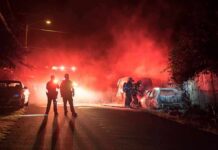
Tallahassee police reported that 12 people were injured in the incident, with 11 suffering gunshot wounds and one person hurt while trying to get away. Officers and medics swarmed the area just before 8 p.m. near Perry and Manatee streets, steps from Bragg Memorial Stadium. The scene sat at the edge of Florida A&M University’s homecoming crowds. The setting amplified fear and confusion. The location matters for response time and witness counts, not as proof the game caused the violence.
Police said six adults and six juveniles were among the injured. The youngest victim is 11. Three victims had serious injuries, one was in critical condition, and eight were reported stable in early updates. Those are not just numbers. Those are families now waiting in hospital rooms and living with fresh scars. Early casualty figures can sound uneven in breaking news. Here, the count reflects a clear police split between gunshot wounds and one flight injury.
How The Shooting Reportedly Began
Chief Lawrence Revell said investigators believe the gunfire started after a fight that involved two or three people. That matches the kind of spark that often turns a crowded sidewalk into chaos. Crowds were thick, emotions were high, and one flare-up can snowball. This early assessment came while detectives processed the scene and gathered statements. Police had not tied the clash to the game itself. The focus stayed on the confrontation and those who opened fire.
Officers had made no arrests by the first overnight briefing, and police named no person of interest. That does not mean the case lacks leads. It means detectives were working the basics: securing evidence, checking cameras, and tracking calls. Expect reviews of nearby surveillance, stadium security video, and cell phone clips to shape the timeline. Ballistics and firearm tracing will help show how many weapons were used and from where shots were fired.
Why Proximity To A Stadium Can Mislead
Coverage often frames gun violence near a school or stadium as a campus crisis. The public deserves precision. A shooting beside a university does not prove a campus cause. Research on college gun incidents shows many events are near, not inside, and are not “active shooter” attacks in the strict sense. The Florida A&M case fits that pattern. The known facts point to a street confrontation near a large event, not a planned attack inside the venue.
At least 12 people, including several minors and children, injured in a shooting near Florida A&M University stadium in Tallahassee after a homecoming game.
— 1960 (@ayoadealabi85) October 26, 2026
That distinction matters for safety and policy. Event planners focus on crowd control, exit routes, and lighting. Police focus on choke points like sidewalks and corners where tempers flare. After-action steps should review camera coverage along Perry and Manatee streets, traffic flow after the game, and where crowds bunched up. Simple changes can blunt risk: better lighting, staggered exits, visible patrols at friction points, and fast medical staging close to heavy foot traffic.
The Human Cost And The Civic Test Ahead
Six minors among the injured is the hard truth that turns policy into duty. Families expect leaders to protect kids first. That starts with catching the shooters. It also means honest communication. State the numbers plainly, as Tallahassee police did: 11 people shot, one injured while fleeing. Keep the fight theory in its lane as a working lead. Do not stretch it into a motive verdict. That kind of discipline builds trust while the case moves.
Community help will speed the work. If you were near Perry and Manatee streets before 8 p.m., share what you saw. If you have video, turn it in. The faster detectives confirm who started the fight, who pulled the trigger, and which way they ran, the faster families get answers. That is common sense and a shared value: tell the truth, back the police, and put the safety of children above the noise. One good lead can close the distance between fear and justice.