
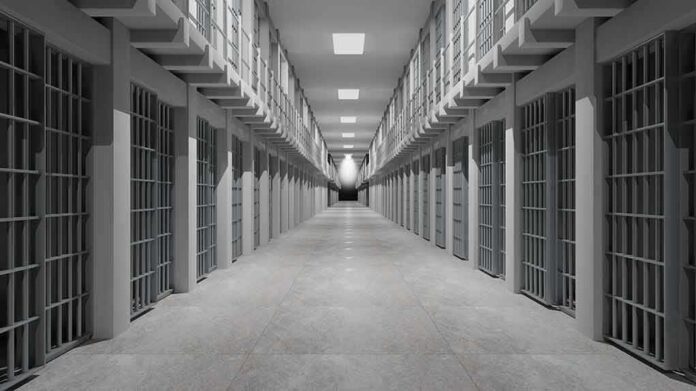
A U.S. Air Force major who criticized President Trump on national television was locked back up the next day, and his lawyer says he has spent up to 23 hours a day alone in a cell.
Story Snapshot
- Defense says Maj. Jason Watson was isolated 20–23 hours daily with lights on continuously.
- Air Force charges include “contemptuous words” toward the president and media comments.
- Military judge heard arguments on whether confinement is necessary before trial.
- Air Force denies “solitary,” calling it policy-required protective segregation.
What Triggered the New Detention
Defense counsel says Maj. Jason Watson gave a CNN interview while free and was detained the next day. The interview repeated his public criticism of President Trump. The timing fuels concerns that speech, not conduct, drove the move. An NPR-affiliated report dated November 18, 2026, attributes this timeline to Watson’s attorney, Chris Mutimer, who says the renewed lockup followed the TV appearance by one day. The Air Force has cited continued misconduct tied to that interview as a rationale.
Stars and Stripes reports the case is now set for a general court-martial under Articles 88, 92, and 133 of the Uniform Code of Military Justice, which cover contemptuous words against civilian leaders, disobeying orders, and conduct unbecoming an officer. The outlet says a military judge heard arguments on November 17, 2026, about whether Watson should remain confined before trial, with a ruling expected afterward. The defense is seeking release pending a February 2027 trial date.
Why the Confinement Conditions Are Disputed
Watson’s lawyer told Snopes his client spends 22 to 23 hours a day alone, with lights on day and night and almost no direct human contact. NPR-linked reporting similarly describes 20–22 hours locked in, very limited interaction, and constant lighting. The Air Force disputes the word “solitary.” A spokesperson says Watson is in administrative protective segregation, separated from civilians as policy requires, with access to library time, religious services, fitness time, counsel, and visits.
The difference matters for law and for public trust. Military law forbids punishment before trial and bans confinement conditions more severe than needed to ensure presence at trial. That standard, rooted in Article 13, asks whether officials intended punishment or imposed unnecessary rigor. Courts weigh both purpose and actual conditions when they review such claims. The current public record does not include the full confinement orders or jail logs that could resolve each point.
Speech Charges Raise Unusual Constitutional Tensions
The charging package reportedly includes speech-related counts tied to a July 1 protest, a June interview, and the CNN spot. Article 88, which targets contemptuous words by commissioned officers about top civilian leaders, has few civilian analogs and sits at odds with everyday free speech rules. Scholars note the military has wider leeway to regulate speech to protect discipline and neutrality, even when similar civilian speech would be protected. That leeway does not allow pretrial punishment.
Lawyer's take: Service members have fewer speech rights than civilians, but "fewer" isn't "none."
What happened:
An Air Force major is reportedly in pretrial confinement, in near-isolation, awaiting court-martial after publicly criticizing the President and calling for…— Drew Shirley Law (@drewshirleylaw) November 22, 2026
These facts land in a moment when many Americans on the right and left doubt that institutions apply rules fairly. Conservatives see selective tolerance for protest and speech. Liberals see a system quick to punish dissent and shield the powerful. This dispute tests both fears. If the government targeted a critic’s speech, that chills everyone. If confinement conditions are harsher than needed, that signals process can become punishment before a verdict.
What to Watch Next
First, watch for the military judge’s ruling on pretrial confinement. That decision should explain whether the government met the legal standard and whether less severe steps could work. Second, look for the written placement records that show if Watson is in protective segregation, administrative segregation, or something closer to solitary. Third, expect sharper focus on whether the order Watson allegedly violated was active at the time of his CNN interview, as some advocates claim.
Why This Case Matters Beyond One Officer
This case will shape how far the government can go when a military officer speaks about elected leaders in public. It will also test whether jail conditions for service members in civilian facilities match the law’s limits on pretrial rigor. A clear record and timely rulings can calm a polarized audience. Vague labels and missing documents will only deepen the belief that rules bend for the powerful and tighten for everyone else.
Sources:
nhpr.org, ypradio.org, stripes.com, snopes.com, wowktv.com, morningstar.com, tjaglcs.army.mil, justsecurity.org