

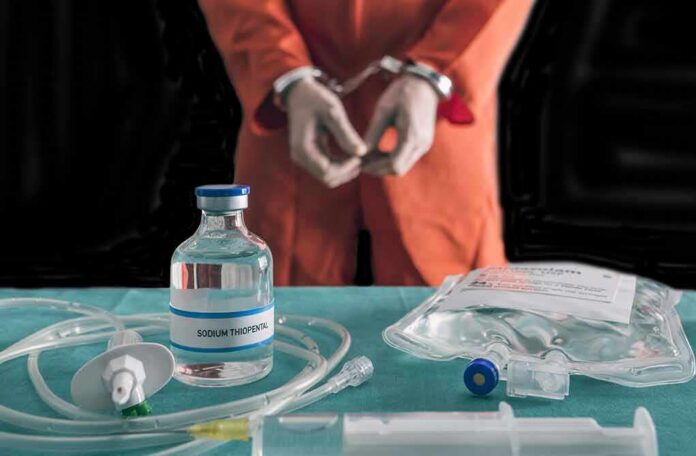
Witnesses say two lethal doses, seven needles, and a muted mic still left Christa Pike alive and in intensive care.
Story Snapshot
- Attorneys say Pike is unconscious, intubated, and on a ventilator after the failed execution.
- Reporters in the chamber described loud snoring after two pentobarbital doses.
- Tennessee officials claim they followed protocol and sent Pike to a hospital.
- Governor Bill Lee ordered a third-party review and called the event a tragedy.
What Tennessee Did, What Witnesses Saw
The Tennessee Department of Correction said it followed every step of its lawful execution protocol and used a drug it says has been consistently effective. Officials confirmed Pike was moved to an off-site medical facility after the attempt. Reporters and other witnesses described loud snoring and continued breathing after two rounds of pentobarbital. A media witness said the chamber microphone was cut off more than an hour into the attempt while Pike was still snoring.
Pike’s lawyers told courts and the press that she remained unconscious, intubated, and on a ventilator at a Nashville hospital in the days after the attempt. On-camera and in filings, defense counsel said she had not regained consciousness. One filing quoted counsel saying Pike “still has a heartbeat and is audibly snoring” during the procedure itself. That claim came as lawyers sought emergency steps to preserve medical and execution evidence for review.
How A Lethal Injection Fails Twice
Defense filings said the execution team worked on Pike’s left arm for about an hour and used at least seven needles. Later descriptions referenced swelling, burning, and blistering on an arm. Attorneys argued neither the initial dose nor the backup dose of pentobarbital worked as intended. Medical experts quoted in national coverage offered a plain theory: the drug did not reach the bloodstream, likely due to poor intravenous access, which can render even large doses nonlethal.
The basic science tracks. Pentobarbital depresses the central nervous system when it gets into the blood at high levels. If the line infiltrates tissue or blows out, the drug sits under the skin, not in circulation. The result can be a sedated but living person who keeps breathing or snoring. That picture matches the witness accounts far better than a clean, quiet passing. It also matches prior cases where bad intravenous access led to protracted, painful procedures.
The State’s Assurances Meet Public Skepticism
Corrections officials stood by their protocol and said the drug has been consistently effective. That statement reads like a legal shield, not a medical explanation. Protocol compliance does not matter if the line fails and the drug never enters the bloodstream. Governor Bill Lee ordered a third-party review after the attempt and paused at least one upcoming execution. He called the event a tragedy and said a full accounting will follow.
Tennessee Correction commissioner to resign days after botched execution of Christa Pike: Governor https://t.co/aXZHzMPrYR
— ABC (@ABCp8js) October 5, 2026
American conservative values demand two things here: the state must carry out the lawful sentence, and it must do so competently, transparently, and without avoidable cruelty. When a procedure ends with emergency transport, contested facts, and a muted microphone, confidence drops. The fix is not spin. The fix is evidence: timestamped logs, drug lot records, intravenous placement notes, and sworn statements from the hospital team that treated Pike right after the failed attempt.
What Must Be Proven Next
Attorneys say Pike remained unconscious and on a ventilator four days after the attempt. That is a grave claim that the hospital’s medical records could confirm or narrow. A review should secure intake notes, brain imaging, and drug level tests. Execution logs should show when each syringe was pushed, by whom, through what line, and with what resistance. Those facts will decide whether the problem was the drug, the dose, or the delivery. They will also guide any lawful next steps.
The Larger Pattern And The Practical Path Forward
National data show lethal injection has a higher “botch” rate than other methods in the modern era. Experts told national outlets that the method is delicate and error-prone, often run behind a curtain with limited disclosure. Tennessee now sits at the center of that debate. A serious review should focus on training, clear fallback rules when two doses fail, better intravenous access standards, and full public reporting after an attempt, not months later in fragments.