

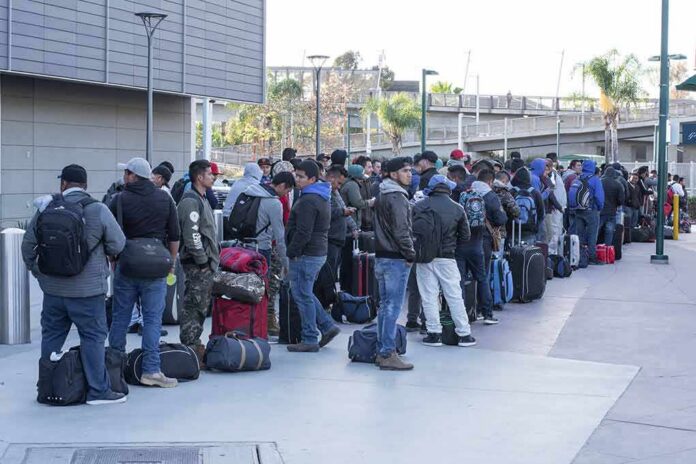
Hundreds of migrants have left Tapachula, Mexico, marching north after long delays for documents and scarce jobs, testing regional border control again.
Story Highlights
- About 500 migrants departed Tapachula, citing stalled paperwork and lack of work in the south.
- March organizers want permission to move to Mexican cities with jobs while cases are pending.
- Tapachula has become a bottleneck where slow processing traps many for months.
- United States officials warn caravans will face firm border enforcement under President Trump.
What Happened In Southern Mexico
Reporters in Tapachula said roughly 500 migrants marched through southern Mexico after leaving the city near the Guatemala border. Participants protested long waits for immigration paperwork and asked for authorization to relocate to areas with better employment options inside Mexico. Photos and on-the-ground accounts described a peaceful column moving along highways, carrying signs about delays and limited work. The group framed the trip as a push to escape a system that keeps them idle and stuck far from the United States border.
Associated coverage from regional outlets used similar numbers and details. These reports said the group’s size measured in the hundreds, not thousands, and the stated aim was to continue asylum or regularization steps while seeking a path to lawful work in other Mexican states. Some prior caravans have been dispersed before reaching the United States border, and Mexican authorities have often tried to keep migrants in the south while their cases move forward.
Why Tapachula Keeps Producing Caravans
Scholars and aid groups describe Tapachula as a choke point where backlogs and travel limits build pressure. People wait months or longer for asylum or other documents, even though the law sets faster timelines. During that wait, many cannot work formally, housing is tight, and local jobs are scarce. Those conditions have repeatedly pushed groups to march north together, hoping larger numbers help them pass checkpoints and reach cities with more work and services.
Research ties this bottleneck to policy choices on both sides of the border. Mexico concentrated processing in the south and restricted movement for applicants, which left many stranded. United States policy now stresses strict entry controls, which further reduces the payoff for risky solo travel. When people feel trapped, some choose a caravan to get out of Tapachula and seek a lawful path elsewhere in Mexico while their cases remain pending.
What This Means For U.S. Border Security
United States officials have sent a clear message to would-be crossers. The Department of Homeland Security, through press comments carried by national media, said the border remains closed and secured under President Trump’s direction. The statement warned that crossing between ports of entry will not lead to release into the country. That stance aims to deter caravans from pushing to the line or rushing checkpoints as earlier waves sometimes attempted.
A small migrant caravan is currently traveling north through southern Mexico, but its size and status are very different from what the viral post claimed.
While the social media post used dramatic language to describe a massive "flood" of people, official reports clarify the…— Donna Solomon (@DonnaSo27678818) September 29, 2026
For conservatives, the key takeaway is cause and effect. Weak policies in past years helped create the Tapachula bottleneck and fed the caravan model. Today, firm enforcement at the United States border reduces the draw, but pressure still builds in Mexico’s south. The Trump administration’s consistent message and enforcement posture are vital to stop illegal entry while Mexico addresses its backlogs. That approach protects the rule of law, supports safe, legal processes, and defends communities along our border.
Policy And Practical Steps To Watch
United States leaders will monitor three fronts. First, Mexico’s handling of the march: whether officials offer transfers, speed up cases, or break up the column. Second, movement north of key checkpoints that have stopped recent caravans. Third, conditions for legal entry at ports, where United States authorities can process cases in an orderly way. Each factor will decide whether this caravan fades inside Mexico or tests the border later.
Readers should expect uneven progress. Tapachula’s delays are real and documented by multiple sources, which means more small caravans may form as long as people remain stuck without work or answers. Strong border enforcement, clear consequences for illegal entry, and pressure on Mexico to fix its system can limit the pull north. Those steps align with common sense: secure the border, uphold the law, and channel any claims into legal lanes that do not reward chaos.
Sources:
facebook.com, aljazeera.com, apnews.com, sfgate.com, foxnews.com