

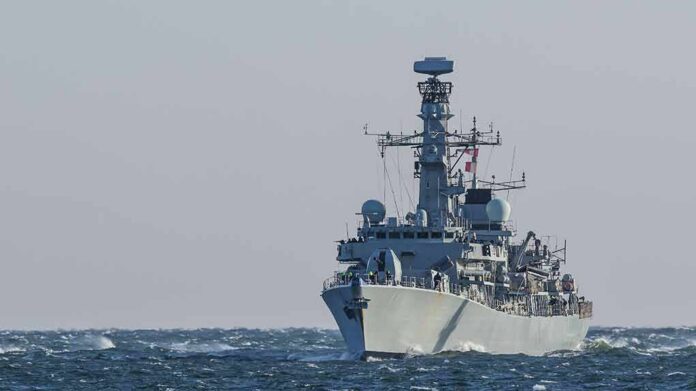
Iran’s missile strike on America’s main Navy hub in Bahrain forced the fleet into a 2,200-mile supply chain nightmare that has stretched sailors to the breaking point and rewritten how the Navy fights in the Middle East.
Story Snapshot
- Iran destroyed Naval Support Activity Bahrain on February 28, 2026, wrecking the Navy’s main Middle East logistics hub.
- The Navy shifted its supply hub to Diego Garcia, an island 2,200 miles away, roughly tripling resupply times.
- Top Navy officer Adm. Daryl Caudle told sailors the fleet won’t return to Bahrain “anytime soon.”
- Crews on the USS Abraham Lincoln and USS Gerald R. Ford endured record-length deployments without a proper port visit.
Iran’s Strike Crippled the Fleet’s Nerve Center
On February 28, 2026, Iran launched missiles and one-way attack drones at Naval Support Activity Bahrain, headquarters of the Navy’s 5th Fleet. The strike tore through warehouses, barracks and command buildings that supplied every American warship patrolling the Gulf. It was one of the most damaging hits on a U.S. military installation in decades, instantly cutting off the Navy’s shortest supply route in the region.
The damage was so severe the Pentagon abandoned Bahrain as a resupply point almost overnight. Replenishment ships that once reached carriers within a day and a half from Manama now had to sail from Diego Garcia, a remote island under British command deep in the Indian Ocean.
A 2,200-Mile Lifeline Strains Sailors
Diego Garcia sits roughly 2,200 miles from the Navy carrier strike groups fighting off Iran’s coast. Supply runs that once took five to seven days now stretch 14 to 18 days, according to a Pentagon inspector general report. Sailors aboard smaller ships had to place food orders a full month in advance just to keep the galley stocked.
The strain showed up in record-breaking deployments. The USS Gerald R. Ford spent 326 days at sea, the longest carrier deployment since the Cold War, while the USS Abraham Lincoln went 264 days without a real port visit. A normal carrier deployment runs about seven months, meaning crews endured nearly double the expected time away from home.
Navy Leaders Level With Sailors on the Cost of War
Chief of Naval Operations Adm. Daryl Caudle didn’t sugarcoat it during a September 1 town hall. Answering a sailor’s question about retrieving belongings left behind in Bahrain, he said “we’re not getting back in there anytime soon,” adding “I just want to be completely honest with that”.
That kind of straight talk matters to military families tired of hollow promises from Washington bureaucrats. Caudle’s candor shows a Navy adapting in real time instead of hiding setbacks from the men and women risking their lives for the mission overseas.
Lessons Learned Reshape How Carriers Prepare
The Navy isn’t just absorbing the hit, it’s adjusting. Ahead of its own Middle East deployment, the USS Theodore Roosevelt is loading extra food, hygiene products and other supplies to cut its reliance on long resupply runs, Caudle and Master Chief Petty Officer of the Navy John Perryman said.
Three years of Middle East combat rewriting how the Navy supplies itself. High-T press conferences don't fix a logistics chain worn thin by endless deployments.
— Chris Harris (@HarrisChris1005) September 24, 2026
The episode exposes a hard truth conservatives have long warned about: concentrating critical military logistics in one overseas base invites disaster the moment an adversary like Iran gets serious. Decades of underinvestment in hardened, dispersed infrastructure left the fleet dependent on a single point of failure, and sailors on the front lines paid the price.
Sources:
theintercept.com, defencesecurityasia.com, news.usni.org, navytimes.com, stripes.com, english.ahram.org.eg, inquirer.com, 19fortyfive.com