

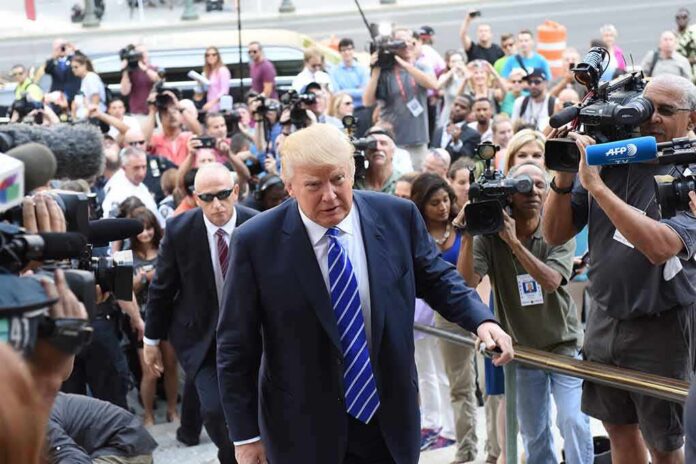
New York City’s mayor used a Trump meeting to advertise “open press” while lawsuits challenge White House bans, turning a policy fight into a political stage.
Story Highlights
- Mayor Zohran Mamdani told President Trump he would welcome all reporters at the New York event.
- President Trump said the White House is banning CNN, MS Now, and Politico over false and unfair coverage.
- Reporters from those outlets said they were blocked from White House grounds after the announcement.
- Coverage confirms the access dispute is real, but New York City has not released a written policy.
Mamdani’s On-Camera Pledge Of “All Press Welcome”
New York City Mayor Zohran Mamdani said he invited “all of the members of the press” to the joint event with President Trump at Gracie Mansion. He said that included outlets that criticize him, adding that everyone should be engaged. His comments were made in front of cameras with President Trump beside him, which ensured national pickup. A video clip published by the British Broadcasting Corporation captured his exact framing and timing during the appearance.
Multiple outlets covered the same scene, which showed Mamdani emphasizing access as a principle, not a favor to specific reporters. Reports described the event as part of a broader week of meetings in New York as world leaders arrived. The coverage focused on the tension between the city’s invitation and the White House restrictions. The attention made the local access choice part of a national free press debate rather than a simple logistics note.
Trump’s Rationale For Restricting Certain Outlets
President Trump said the White House would ban CNN, MS Now, and Politico because of what he called cumulative false and unfair reporting. He argued that the outlets spread fiction and lies about him and the administration. His posts and remarks framed the action as a response to conduct, not a blanket rule. Major wires and networks reported his justification and the immediate blowback from targeted outlets and media lawyers the same day.
After the announcement, journalists from the named outlets reported they were denied entry to the White House grounds. Those accounts included same-day descriptions of blocked access and pulled credentials. National Public Radio and Cable News Network both documented those denials, which underscored that the policy was not theoretical. The denials added urgency to lawsuits and statements that warned about content-based access rules at public facilities.
What We Know, What We Do Not, And Why It Matters
Coverage confirms Mamdani promised open access for the New York event. However, no written city credential policy, attendee list, or security memo has surfaced in public reporting. That gap means his stance is clear as a statement of values but not yet proven as a standing, enforceable rule. The contrast with the White House restrictions is real, but the record does not show if any outlet was actually rejected or admitted under special terms at Gracie Mansion.
TRUMP–MAMDANI MEETING SPARKS NEW MEDIA CLASH
At Gracie Mansion, New York City Mayor Zohran Mamdani said he welcomed all members of the press. President Donald Trump then remarked that the media “never boycott” him, pointing to the large press presence. The exchange came amid an…— CSB News USA (@csbnewsus) September 22, 2026
For constitutional conservatives, two ideas matter here. First, government should not control coverage by rewarding praise and punishing criticism. Second, order and security still require neutral, clear rules for credentials. Case law often says once a government opens facilities to the press, it cannot deny access for arbitrary or content reasons. That standard has guided past disputes, even when tempers flare and coverage feels slanted or unfair to those in office.
What Comes Next For Readers And Voters
New York City can settle doubts fast by releasing the credential list, the press advisory, and any security instructions for the event. The White House can defend its case by producing consistent, viewpoint-neutral criteria and a prompt appeal process. Courts will likely weigh in if lawsuits move forward. Transparency on both sides will help citizens judge whether these steps protect the First Amendment or drift into speech-based gatekeeping dressed up as process.
Sources:
facebook.com, bbc.com, cnbc.com, straitstimes.com, forbes.com