

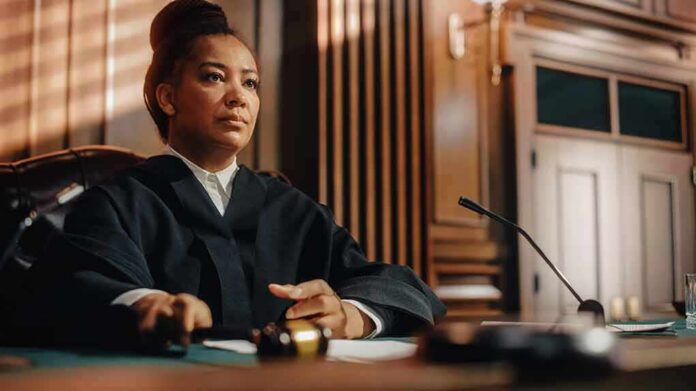
Judge Judy told critics of America to “go somewhere else,” drawing a bright line on patriotism that many frustrated citizens will recognize as common sense.
Story Highlights
- Judge Judy said people who dislike America should leave rather than remake it.
- Her remarks praised the United States as “the greatest” and “most successful” country.
- Coverage shows how short quotes can fuel national debates over patriotism and dissent.
- The comments echo her long record of tough-love views on personal duty and standards.
What Judge Judy Said, And Why It Hit A Nerve
USA Today published an interview where Judy Sheindlin said, “If you don’t like this country, go somewhere else.” She added, “Don’t come to the greatest country in the world, the most successful country in the world and say, ‘I want to change it.’ There are other countries that have the something else that you want. Go there.” The quotes were presented as part of a profile on her work and outlook, not a campaign speech or viral clip.
The plain message was patriotic and blunt. She praised the country’s success and urged people who resent its core character to move instead of trying to tear it down. Many readers on the right will hear a defense of American exceptionalism. They also hear a pushback on constant negativity, identity politics, and “woke” demands to rewrite rules that have guided the nation for generations. The words were direct, but they track with her well-known style on and off the bench.
How The Media Turns A Quote Into A Culture Clash
Communication scholars describe a pattern: journalists pick a short line and frame it as a symbol for a bigger fight. That process often pushes a single quote into national debate over values, identity, and power. It is not new, but social media accelerates it and shortens context. Studies of framing show how a brief remark can be lifted, repeated, and used to define a person’s stance across platforms and headlines, sometimes beyond the speaker’s full meaning.
This cycle tends to intensify when the topic is patriotism. After major national events, figures who question or mock the country often face blowback, boycotts, or platform pressure. That reaction usually comes from private actors, not the government. The result is a predictable loop: a sharp quote, a rush of praise and outrage, and then a new test of whether dissent is loyal critique or a push to undo American principles. The loop is likely to recur here as well.
Why Her Message Resonates With Many Conservatives
Conservatives see rising costs, crime in big cities, and border chaos from years of left-wing policies. They also see schools and offices pushing divisive agendas over clear standards. Judge Judy’s words meet that mood. She links love of country with duty, merit, and accountability. That matches her past calls for young people to work hard and stop settling for mediocrity, and for voters to pay attention and take part instead of complaining from the sidelines.
Judge Judy just told the truth the left cannot stand.
In a new interview published Tuesday by USA TODAY, Judy Sheindlin dropped the hammer on the crowd that lives in the United States, enjoys its wealth and freedom, and then spends every waking hour trashing the place.
“I have… pic.twitter.com/4IKuspNWnj
— The Gateway Pundit (@gatewaypundit) September 23, 2026
Supporters will also hear a defense of constitutional order. People are free to speak and protest. People are also free to say “America is good” and to defend its traditions. Telling chronic critics to choose another nation is not censorship; it is an answer in the marketplace of ideas. It says this: do not burn down the house that shelters your liberty. If you will not help fix problems within our founding framework, you do not have to live here.
Sources:
thegatewaypundit.com, usatoday.com, foxnews.com, qspace.library.queensu.ca