

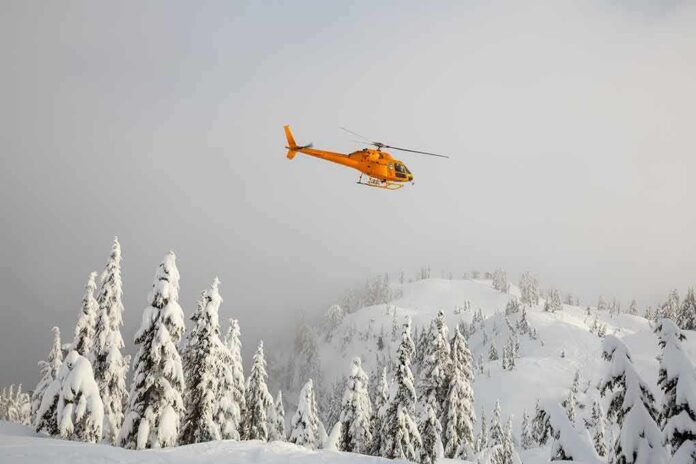
A San Jose climber survived a roughly 500-foot slide on Mount Shasta, then crawled through the night to reach a cabin where rescuers airlifted him to a hospital.
Story Highlights
- Climber lost control while glissading and slid about 500 feet, injuring his feet.
- He crawled overnight to Horse Camp Cabin and was found by a hiker the next day.
- Rescuers airlifted him after friends reported him missing when he did not return.
- Mount Shasta officials warn glissading on firm snow often leads to severe accidents.
What Happened on Mount Shasta
Officials said a San Jose climber attempted to glissade down the snowy Avalanche Gulch route, lost control, and slid about 500 feet. During the fall, he suffered deep cuts and serious injuries to his feet, and his phone had lost power earlier in the descent. With no way to call for help, he removed his boots due to swelling and crawled through the night toward Horse Camp Cabin. A hiker found him inside the shelter the next afternoon and alerted rangers.
Search and rescue teams had already mobilized after the man’s friends reported him missing when he did not return as planned. Rangers coordinated an air evacuation once they confirmed his location and condition. Crews airlifted him to a hospital for treatment of his foot injuries and lacerations. Authorities said the incident occurred late in the week, after a summit attempt, and during a descent on firm, slick snow that often turns dangerous when speed gets out of control.
Why Glissading Turns Deadly Fast
Mount Shasta Avalanche Center guidance warns climbers to avoid glissading on hard or icy snow, remove crampons before sliding, and control speed at all times. Firm morning or late-day surfaces can turn a harmless slide into a high-speed fall with no safe runout. Recent incident reports from the area document repeated accidents when climbers try to glissade without soft snow, proper technique, or a clear stopping zone. The center’s advisory is blunt: do not glissade on firm snow.
Accident patterns on Mount Shasta’s Avalanche Gulch show many injuries happen on descent, when fatigue sets in and snow conditions change with sun and wind. The Avalanche Center’s rescue narratives from prior seasons describe lost control, long slides, and traumatic injuries to legs and feet. Those themes match this case: a fast, uncontrolled slide, destroyed footwear, and a painful crawl to safety. These are not rare outliers, but cautionary examples that local experts warn about every season.
The Overnight Crawl and Rescue Response
The climber reportedly shed his boots as his feet swelled from impact cuts and pressure, then crawled over snow and rock toward Horse Camp Cabin, a known waypoint on the route. A hiker discovered him there the following day and notified authorities. Rangers and county teams organized an extraction and used a helicopter to move him to higher care. Officials confirmed the slide distance at roughly 500 feet and the foot injuries as the most severe wounds from the fall.
Local outlets report the man had summited earlier, then began the descent when conditions were less forgiving. The fall occurred on a steep section where firm snow can act like concrete. That surface robs climbers of friction, so any slip quickly becomes a slide. Without a soft runout or a successful self-arrest with an ice axe, speed builds fast. In this case, the slide length and the damage to his feet show how unforgiving those slopes can be late in the day.
Safety Lessons for Every Climber
Climbers planning Mount Shasta should carry an ice axe, know self-arrest, and time their climb to descend on soft snow. Guides urge people to keep groups together, maintain a turnaround time, and never glissade with crampons on. Most of all, they say to skip glissading when the snow is firm. That one choice prevents most slide injuries. The Avalanche Center repeats these points often, especially as more visitors arrive with less alpine experience and rely on quick-descents that can backfire.
A rescue like this strains local teams and puts more people at risk during the operation. Clear planning reduces those dangers. Leave a plan with a friend, pack a headlamp and extra layers, and keep a charged phone and battery pack. Conservative choices on the way down save more lives than heroics on the way up. Officials say this accident again shows how fast a fun slide can turn into a life-threatening ordeal on hard snow, even for fit climbers with a successful summit behind them.
Sources:
nypost.com, abc7news.com, patch.com, krcrtv.com, sfgate.com, shastaavalanche.org, ground.news