

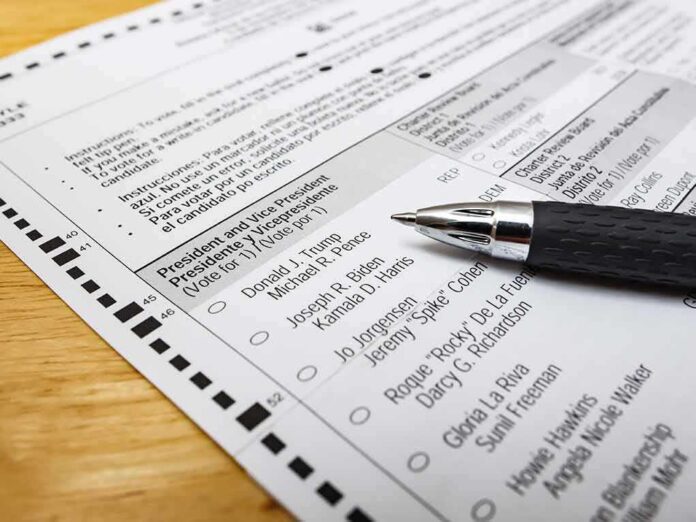
A new round of election-night reporting is giving conservatives a familiar warning: live vote totals are useful, but they are not the final word.
Quick Take
- Live results are being tracked for Alabama, Georgia, Oklahoma, Washington, D.C., and California’s 14th District.
- Outlets are using unofficial returns and live data feeds to project winners before certification.[2][8]
- Election officials say election-night results are still unofficial until canvass and certification are complete.[2][9]
- The split between fast media calls and final official counts keeps confusing voters and fuels distrust.[7][9][12]
Live Results Are Rolling In
Election coverage on Tuesday is centered on runoff and primary contests in Alabama and Georgia, plus primaries in Oklahoma and Washington, D.C. One live-results roundup also notes a special election runoff in California’s 14th Congressional District.[3] Another election-night article says the contests are being followed with live results from Decision Desk HQ, which is the same kind of fast reporting used across major race trackers.[4]
That setup matters because live election pages are built for speed, not finality. The United States Election Assistance Commission says election-night returns are not the certified record, even when a page shows all precincts reporting.[2] The Federal Election Commission tells voters to rely on state election offices for election results information, which underscores a basic point many Americans already know: the first number out of the gate is not always the last word.[14]
What Media Calls Actually Mean
News outlets do not wait for certification before they project winners. The Center for Election Innovation and Research explains that media organizations collect unofficial results in real time, compare them across sources, and use those numbers to make a call on the likely winner.[8] The same source says those calls are predictions, not official results, and that counting can continue for hours, days, or even weeks after the call is made.[8]
That distinction is important for readers who are tired of being told to trust the process while the process keeps moving. The United States Election Assistance Commission says official results come only after all valid ballots are included and the required steps are finished.[2] A Bipartisan Policy Center explainer adds that election-night totals are never final and that canvass and certification come later.[12] For voters, that means caution is not cynicism. It is just common sense.
Why Final Counts Take Time
Election officials face a harder job than most people realize. The Elections Group says officials need to manage public expectations, provide frequent updates, and explain problems clearly when they arise.[7] The same guidance says election results are unofficial until post-election checks and balances are complete.[7] That helps explain why close races can stay unsettled long after the first wave of returns, even when the media already has a strong sense of where the race is headed.
That slower pace does not mean something is wrong. It means ballots must be counted, checked, and certified before the final totals become the legal record.[9][12] In a political climate where voters already worry about overspending, broken borders, and government overreach, transparent counting should be the minimum standard. Officials who move fast should still be accurate, and media outlets should keep reminding viewers that a race call is not the same thing as a certified result.
What This Means for Conservative Voters
For conservative readers, the lesson is simple. Watch live results, but keep a sharp eye on the difference between reporting and certification. The Election Assistance Commission says the canvass confirms every valid ballot cast, including early, mail, Election Day, and provisional ballots.[9] That process protects election integrity, but only if voters understand it. Confusing unofficial updates with final truth only creates more doubt, and doubt always grows fastest when people are rushed.
The safest view is also the most honest one. Live election pages can give a strong picture of a race, and they often do it well.[8][12] But the final answer belongs to the official count, not the first headline. In a year when many Americans are already fed up with bad governance and sloppy public messaging, that old rule still holds: count the votes, finish the canvass, and certify the result before anyone pretends the story is over.[2][9]
Sources:
[2] Web – LIVE: Election Results – Alabama, Georgia, Kentucky, Oregon
[3] Web – LIVE ELECTION RESULTS: Georgia, Alabama, Texas, Minnesota, and …
[4] Web – Live Results: Oklahoma and DC Primaries, Georgia and Alabama Primary …
[7] Web – Donald Trump wins Alabama
[8] Web – 4 Tips for Communicating About Election Results Reporting
[9] Web – CEIR Explains: How Election Results Coverage Really Works
[12] Web – Statistical detection of systematic election irregularities – PMC – …
[14] Web – [PDF] ASSESSING AND VERIFYING ELECTION RESULTS