
Record-low Danube River levels have pushed Hungary and Romania into an energy crisis, forcing nuclear reactors to cut power and even shut down just when their people need electricity the most.
Story Snapshot
- Danube River drought has slashed nuclear output in Hungary and Romania, triggering a regional power crunch.
- Hungary’s Paks plant, which normally makes nearly half the country’s electricity, is being powered down toward a full shutdown.
- Romania’s Cernavodă nuclear plant has already shut at least one reactor and moved to cut both due to low river flow.
- Europe’s bet on river-cooled nuclear and green agendas is colliding with real-world limits of water, heat, and grid reliability.
Danube drought pushes nuclear plants toward shutdown
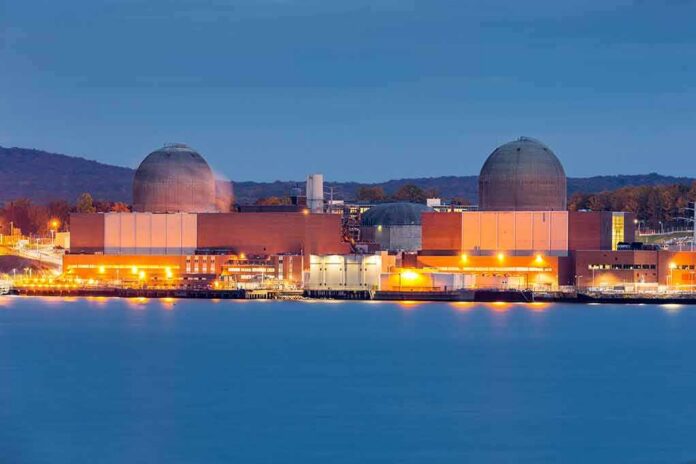
Record-low water levels on the Danube River are now forcing nuclear plants in Hungary and Romania to cut power output and prepare for full shutdowns. Hungary’s Paks Nuclear Power Plant, a four-reactor site that usually provides over 40% of the country’s electricity, has already reduced generation across several units because the river cannot supply reliable cooling water. Prime Minister Péter Magyar and the state operator warned that the plant may have to shut down completely within days if the river keeps dropping.
Romania’s Cernavodă Nuclear Power Plant is facing the same crisis downstream, where Danube flow has fallen to near historic lows. One of its two reactors has already been taken offline for safety reasons, and plans were drawn up to shut the second unit as flow rates approached the minimum needed for cooling. Energy officials say river discharge in Romania is barely a third of normal summer levels, leaving far less water to draw through once-through cooling systems that were designed for cooler, wetter decades.
Heatwave, drought, and Europe’s energy choices collide
Weeks of extreme heat and little rain across central and eastern Europe have turned the Danube into a shallow, slow-moving river instead of the strong waterway these plants were built around. When water sits low and hot, reactors can no longer return warmed water without breaking environmental rules or risking fish kills and local ecosystems. Operators must then cut power, even if reactor cores themselves remain stable, because the grid rules say the river cannot be used as a giant waste-heat sink beyond strict limits.
Independent energy analysts note that around seven gigawatts of nuclear capacity across Europe are offline or curbed right now because of low river levels and heat. That is about ten percent of total nuclear capacity in the European Union, lost during peak demand season when air conditioners, hospitals, and factories all need steady power. The squeeze forces countries to burn more natural gas and coal or to import electricity, driving up prices for families and businesses already strained by years of high energy costs and inflation tied to earlier policy choices.
What this means for energy security and American readers
The shutdown risk at Paks has exposed how much Hungary, like many European nations, relies on one huge baseload plant with a single cooling source. Once the Danube drops below the intake nozzles or rises above allowed discharge temperatures, the whole system must slow or stop, no matter how much the grid needs the power. Hungary is already planning industrial power cuts and lighting restrictions in cities to keep households supplied, a step that shows how quickly a river crisis becomes a national energy emergency.
Hungarian Market and Paks Nuclear Power Plant
The full shutdown of the Paks Nuclear Power Plant has been postponed, but it remains a key risk:
the plant is operating at just over 10% of its capacity;
the remaining unit, with approximately 240 MW of capacity, may continue…— Döbi (@Martyusz007) August 3, 2026
For American readers, this episode is a warning about real-world limits on energy systems built around fragile assumptions. European leaders spent years chasing aggressive climate targets, pushing intermittent wind and solar while keeping legacy nuclear plants tied to rivers instead of building modern cooling towers or diversified baseload. Now, in a major heatwave, they are learning that water, weather, and grid reliability still matter more than slogans, and that losing firm power makes people suffer first, not political talking points.
Sources:
dw.com, apnews.com, world-nuclear-news.org, euronews.com, reuters.com, youtube.com, english.news.cn, facebook.com, latimes.com, kth.diva-portal.org