

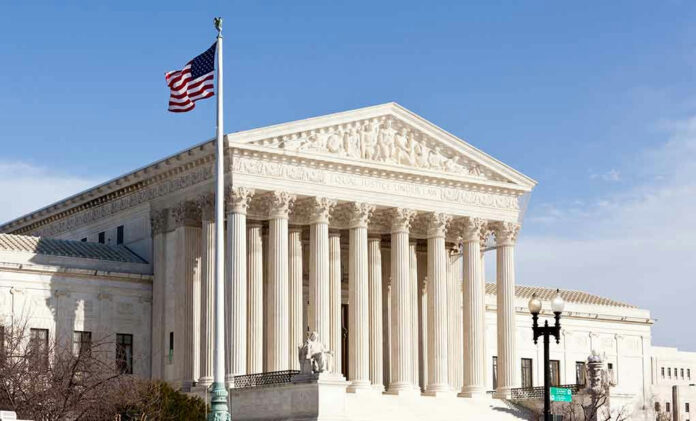
Supreme Court signals a major win for the rule of law on immigration, backing the Trump team’s power to end Haiti’s Temporary Protected Status.
Story Highlights
- Supreme Court signals support for ending Haiti TPS under clear statute [7]
- 1990 law limits courts from second-guessing TPS termination decisions [1]
- Prior ruling let Trump end Venezuela TPS during ongoing suits [2]
- DHS cites national interest and security concerns in Haiti decision [2]
What The Supreme Court Is Signaling On TPS Authority
Court watchers reported that justices signaled they would side with President Trump’s administration on ending Haiti’s Temporary Protected Status after April arguments. Their questions focused on Congress’s text and limits on court review. This tracks recent outcomes where the Court let the administration roll back other Temporary Protected Status designations while cases continued. The message is simple: when Congress is clear, the executive can act, and lower courts should not rewrite the law’s boundaries [7].
Last year, the Court already allowed the administration to end Venezuelans’ Temporary Protected Status during litigation. That move showed where the Court stands on emergency requests and statutory power. It confirmed that Temporary Protected Status is, by design, temporary and controlled by the executive branch. That earlier green light set the stage for this Haiti fight. It also warned advocacy groups that emergency blocks will face a higher bar than they expected [2].
The Law: Congress Drew A Bright Line On Court Review
Arguments at the Supreme Court centered on a key part of the 1990 immigration law. That law says courts cannot review the Secretary of Homeland Security’s final call to end Temporary Protected Status. Government lawyers argued that the Secretary’s determination, including the weighing of facts, is not for judges to revisit. Several justices pressed the challengers on why courts should step in when Congress clearly fenced them out of second-guessing such decisions [1].
The Court took the Haiti case early, even before a federal appeals court weighed in. That unusual step showed strong interest in settling the statute’s meaning. If the Court locks in the no-review rule, future attempts to stretch Temporary Protected Status beyond clear limits will likely fail. That would return decisions to the elected branch that answers to voters, not to courts swayed by political pressure or media narratives about immigration [1].
Why The Administration Says Ending Haiti TPS Serves The National Interest
Department of Homeland Security Secretary Kristi Noem determined that renewing Haiti’s Temporary Protected Status would be against the national interest. She cited the lack of a central government partner to verify criminal histories and manage returns. The administration’s filing stressed that Congress authorized the executive to make these hard calls. It also argued that all parts of the Secretary’s determination fall outside judicial review because the statute says so in plain terms [2].
Great news!
The Supreme Court upholds presidential authority on immigration.
Ending TPS for Haiti & Syria is a strong step toward restoring border control & enforcing the law.
Caution However!
1 strong step does not complete the journey.
There is still much work to do!
🙏🇺🇸🙏 pic.twitter.com/aihzISJmKf— SavvyServant (@SavvyServant) June 25, 2026
Media outlets and advocacy groups pushed claims of bias and process flaws, and some district judges issued temporary rulings against the administration. Yet the high court’s posture suggests those lower orders will not stand. The core question is not whether Haiti faces hardship. The question is who decides when a temporary program ends. Congress assigned that job to the executive and limited court review. The Supreme Court appears ready to affirm that guardrail [7].
What Comes Next For Policy, Borders, And Communities
If the Court rules for the administration, agencies will move to wind down Haiti’s Temporary Protected Status on a set timeline. That will send a clear signal to cartels and smugglers that an end date means an end date. It will also ease pressure on the border, local schools, and hospitals that have absorbed costs for years while Temporary Protected Status kept expanding. Congress can still act, but it should do so openly, not through court-ordered extensions without a vote [2].
Conservatives should watch for two things. First, efforts in Congress to override the statute and create rolling amnesties by another name. Second, fresh lawsuits that try to repackage policy disagreements as process complaints. A strong ruling that respects the 1990 law would help stop both moves. It would defend separation of powers, restore common sense to immigration policy, and protect taxpayers who have carried the burden of endless “temporary” programs [1].
Citations:
[1] Web – BIG (YUGE) Day for Trump Administration on Immigration: Detailed …
[2] Web – Haitian immigrants ask Supreme Court to toss TPS case – NPR
[7] Web – Prolonged Limbo for Haitian TPS Holders: What Recent Court …