

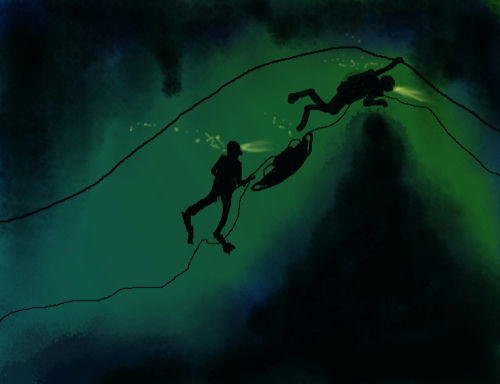
One wrong turn in a cave can turn a routine dive into a fatal puzzle, and the Maldives case may have a surprisingly human explanation.
Quick Take
- Five Italian divers died during a cave dive near Vaavu Atoll in the Maldives, and the bodies were later recovered from deep inside the cave system .
- Finnish rescue divers believed the entrance created a misleading “sand wall illusion,” which may have made the cave look blocked when it was not.
- The recovery effort became deadly in its own right after a Maldivian military diver died during the operation.
- The case sits at the intersection of bad visibility, poor judgment, and cave geometry, which is why the public debate has stayed so intense.
The Maldives Tragedy Started With a Deadly Misread of the Cave
The five divers entered a marine research expedition that took them into an underwater cave network near Alimathaa, and the bodies were later found deep inside the system [1]. That detail matters because it points away from a surface accident and toward a navigation failure inside an overhead environment. In cave diving, the exit can vanish in a cloud of silt, and a small error can become irreversible in seconds.
Finnish rescue divers who studied the scene believed the entrance may have created a deceptive visual effect, the kind that makes solid rock or a silted opening look like a dead end. That “sand wall illusion” theory fits the facts that the bodies were discovered deep within the cave and that the divers appear to have pushed beyond normal recreational limits. The National Defense Force in the Maldives also reported that the operation involved difficult recovery work at serious depth [2].
Why Cave Diving Cases Turn Into Arguments About Cause
Cave-diving fatalities rarely deliver a clean explanation. The environment eats evidence, visibility collapses, and the few clues left behind often get interpreted through a mixture of physics, experience, and hindsight. Here, some reporting pointed to possible oxygen toxicity or gas-mixture issues, while other coverage emphasized the cave setting itself and the difficulty of the search [1]. Common sense says both can matter, but the deepest danger is often the first bad decision that sends divers farther inside.
The strongest conservative lesson in a case like this is not glamour or speculation; it is discipline. Adventure rewards competence, not ego. If a cave entrance looks blocked, if depth limits are being stretched, or if the route back is unclear, prudence should win every time. That rule sounds obvious only after the tragedy. In the real world, it is the difference between a close call and a funeral.
The Recovery Operation Shows How Dangerous the Rescue Was
The search did not end cleanly. A Maldivian military diver died during an earlier recovery attempt, and authorities later suspended operations before resuming long enough to bring the remaining bodies out [1]. Finnish specialists were brought in to help map the cave and recover the divers, which shows how quickly a missing-person case can become a technical recovery mission. The fact that even trained rescuers faced mortal risk tells you how unforgiving the site was.
Finnish divers believe ‘sand wall illusion’ caused deadly Maldives cave disaster
Recovery team says five Italian divers may have mistaken a dead-end tunnel for the exit after a sandbank hid the correct corridor; GoPro cameras recov…https://t.co/g8CbxAq8Ux pic.twitter.com/Qm5OwDnssf
— Ynet Global (@ynetnews) May 21, 2026
That is why the “solved mystery” framing should be handled carefully. A plausible explanation is not the same thing as a proven one. Still, the available reporting lines up: a cave entrance that may have fooled experienced divers, a group that went too far into an overhead environment, and a recovery that cost another life [1][2]. The lesson is harsh but clear. Water hides mistakes, and caves punish them.
Sources:
[1] Web – Five Italian divers die in Maldives cave – DIVE Magazine
[2] YouTube – Bodies of 2 missing Italian divers recovered in the Maldives