
Coordinated bomb and arson attacks hit Thailand’s deep south in one night, forcing a curfew and urgent security response.
Story Highlights
- Thai security officials reported more than 50 coordinated incidents across southern provinces.
- Attacks targeted shops, local offices, vehicles, and infrastructure through bombs and arson.
- Narathiwat authorities imposed a curfew under the Martial Law Act to restore order.
- Prime Minister Anutin called an urgent meeting with security chiefs in Bangkok.
Coordinated Nighttime Strikes Across Multiple Districts
Thai security authorities reported a wave of coordinated attacks from about 8 p.m. to midnight on Saturday, August 22, 2026. Officials said incidents spanned numerous districts across the southern border provinces and appeared aimed at creating unrest. The Internal Security Operations Command in the south cited a total of 51 incidents across 21 districts in Narathiwat, Pattani, and Yala. Reports described bomb blasts, arson, and damage to public and private property during the same time window.
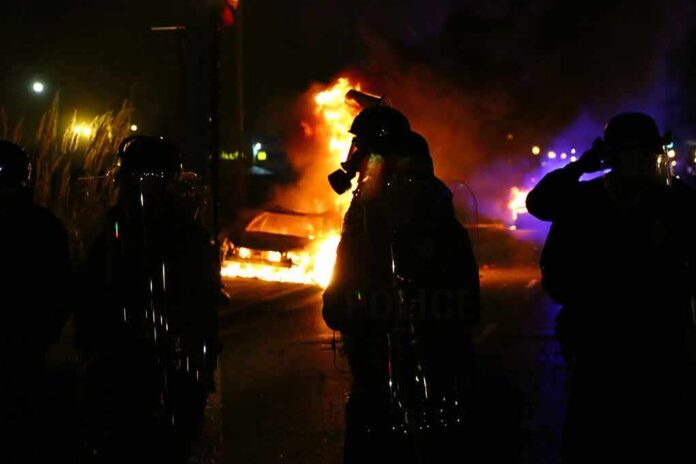
Wire services and local outlets detailed scenes of burned convenience stores, damaged vehicles, and hit local government sites. Officials and reporters named key categories of damage, including small shops, municipal facilities, telecom towers, and rail infrastructure. Those reports placed most activity in Yala, Pattani, and Narathiwat. Some coverage also referenced impacts reaching a fourth province, Songkhla, underscoring how fast-moving events can touch multiple areas during a tight window.
Immediate Curfew And Security Controls In Narathiwat
Narathiwat’s task force ordered a curfew beginning at 10:15 p.m. Saturday through 6 a.m. Sunday under the Martial Law Act of 1914. Commanders said the measure aimed to protect civilians and give police and soldiers room to secure sites and check for more devices. Security forces raised patrols, boosted checkpoints, and warned the public to avoid suspicious objects or bags. The curfew and added sweeps signaled a rapid state response to a complex and spread-out threat.
Thai army and regional commands followed with public guidance on travel and safety. Units asked residents to report strange activity and keep distance from any damaged sites until bomb teams cleared them. Local health services stood ready to treat the wounded, while police teams began gathering evidence from blast and arson scenes. Early tallies varied on injuries, with at least two people reported hurt in the initial aftermath, reflecting the pace of reporting during a broad incident wave.
National Leadership Engagement And Conflict Context
Prime Minister Anutin Charnvirakul convened an urgent meeting with top security officials at Government House to review the situation and direct follow-up steps. The move brought national-level attention to a region hit by years of sporadic violence. Thai Public Broadcasting Service reported the session focused on rapid stabilization, investigation, and protection of key sites. No group had claimed responsibility at the time of the meeting, but officials placed the events in the ongoing southern insurgency context.
Thailand’s security authorities are not attributing the latest attacks in the southern border provinces solely to the BRN. National Security Council secretary-general Chatchai Bangchuad said the violence may have been retaliation for intensified state operations, but crime,…
— Thenationthailand (@Thenationth) August 24, 2026
For more than a decade, southern border provinces have seen low-level insurgent activity punctuated by spikes in violence. Analysts and past government statements describe recurring bombs, arson, and attacks on local targets and infrastructure. The weekend surge fits that pattern: a short, intense window with many small strikes designed to stretch responders and send a message. Authorities now face the next step: securing proof from each site, identifying cells, and preventing follow-on attacks while daily life resumes.
Damage Profile, Public Safety, And What Comes Next
Officials and reporters listed damaged convenience stores, municipal vehicles, telecom equipment, electrical poles, and railway sleepers among the targets. This mix hits public confidence and basic services without requiring large bombs or complex teams. Police forensic units will review residues and device parts to see if the same builders worked across scenes. Investigators will also compare ignition methods to link arson attempts. That analysis will guide arrests and wider security actions in the coming days.
Residents in Narathiwat, Pattani, and Yala can expect more checkpoints, nighttime controls, and extended sweeps around transit and utility hubs. Commanders urged patience as they clear areas and reopen roads. The fast curfew order, stepped-up patrols, and national-level coordination show a government trying to move quicker than the attackers. Clear communication, firm enforcement, and steady services will be key to deny copycat attempts and keep families, shops, and transport running as normal.
Sources:
aljazeera.com, nationthailand.com, thestar.com.my, thailandnews.co, x.com