
A deadly ambush in Congo left American veteran Tim Kennedy wounded and several allies dead, as sources point to Rwandan military involvement in the fight over cobalt-rich ground.
Story Highlights
- Sources reportedly tie the ambush to Rwandan forces operating in eastern Congo.
- Former Green Beret and UFC fighter Tim Kennedy was shot three times in the leg.
- About 20 people were killed or wounded in a coordinated attack during a movement between sites.
- Erik Prince’s Vectus Global team supported Congolese security operations in a volatile region.
Coordinated Ambush Hits Vectus Team In Eastern Congo
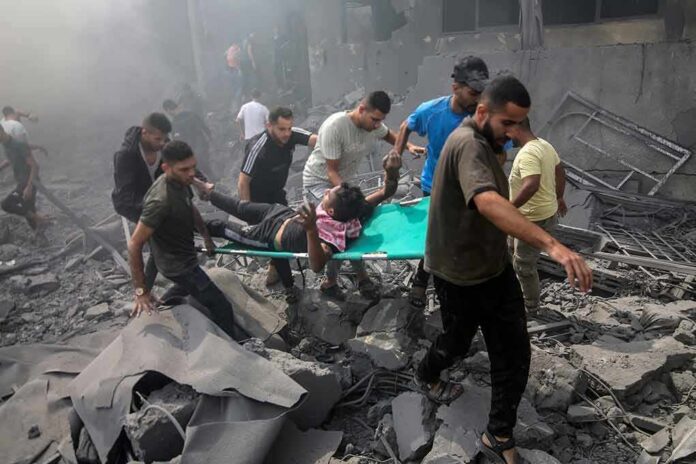
Reuters-based reporting said an organized ambush struck a Vectus Global convoy while it moved between locations in South Kivu, a front line in the war with the M23 movement. Two sources with direct knowledge reportedly blamed Rwandan military personnel for the attack, citing the planning and timing seen on the ground. The strike left roughly 20 people dead or wounded, including at least seven Congolese, one New Zealand veteran killed, and foreign contractors among the injured.
Reports said former United States Army Green Beret and mixed martial arts veteran Tim Kennedy was hit three times in the leg. He survived and was evacuated after what was described as a long and difficult medical movement. A representative for Vectus Global declined public comment in initial coverage, and no official after-action report has been released. Rwanda has denied backing M23 in the past, but international bodies have documented links before.
Sources Describe Military-Grade Tactics And Possible Drone Tracking
One source told Reuters the team was transitioning between sites when the attackers sprang a complex ambush that showed military-level discipline. A Congolese government source suggested Rwandan forces aligned with M23 may have tracked a surveillance drone to locate the team before the strike, though the account did not include a technical readout in public reporting. The operation’s speed and organization matched the pattern seen in eastern Congo’s proxy-heavy battlefield.
United Nations experts and Western governments have previously tied Rwandan support to M23 operations in the region, which gives context for the latest claims and the contested terrain in South Kivu. That backdrop helps explain why a private military support element would face high-end threats. The attackers chose a movement window, which is the most vulnerable phase for any convoy. That choice, plus casualty scale, points to planning, not chance contact.
Why A Private Force Was There And What It Means For U.S. Interests
Reporting linked Erik Prince’s Vectus Global to a Congolese security and military-support effort. A United Nations Group of Experts account, cited in press reports, described tasks like border security support, strategic advice to the Congolese army, aircraft, and recruiting veteran operators to bolster state capacity. These missions aim to help the Congolese government push back against armed groups and protect key routes tied to cobalt and other critical minerals vital to modern energy and defense supply chains.
FORMER UFC FIGHTER TIM KENNEDY WOUNDED IN DEADLY CONGO AMBUSH
Many MMA fans will recognize Tim Kennedy, the former UFC middleweight contender and U.S. Army Green Beret.
Reuters reported on October 9 that Kennedy was among those wounded during a September 17 ambush involving… pic.twitter.com/aOw2Ig4PfB
— IntegralAnswers (@IntegralAnswers) October 10, 2026
The United States depends on stable supplies of cobalt for batteries, tools, and national defense gear. When militants or foreign-backed groups control mines and roads, prices rise, factories slow, and America becomes more dependent on rivals. The attack also shows how today’s wars blend state troops, proxies, and contractors. Clear rules, strong oversight, and tight communications security are essential when American veterans serve abroad to help partner nations hold ground against well-armed foes.
The Bigger Battlefield: Proxy Warfare And Accountability
Eastern Congo has long mixed national armies, militias, and outside support, which blurs who gave the orders for any single fight. Academic and policy research shows proxy setups can cloud blame and slow a firm response, even when evidence of ties exists. That reality fits the pattern here: sources describe tactics and likely backers, while formal adjudication often lags. Still, past United Nations findings have detailed Rwandan support to M23 across multiple years, shaping how observers read events.
For conservatives, two points stand out. First, America needs secure, lawful access to critical minerals, not reliance on regimes or militias that weaponize supply. Second, our veterans who help partner nations deserve tight planning, strong intelligence, and rapid rescue options. President Trump’s administration has prioritized resilient supply chains and pressure on hostile actors. This incident underscores why firm policy, clear lines of authority, and strong logistics matter when lives and vital resources are on the line.
Sources:
mediaite.com, yahoo.com, athlonsports.com, thebrief.news, nypost.com, x.com