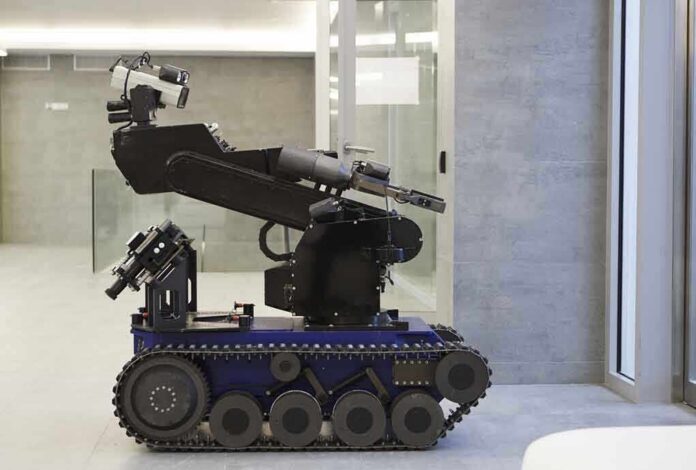
Amazon’s Ring just moved security cameras off the wall and set them roaming through your world.
Story Snapshot
- Ring launched a robotics division with a flying Drone Cam and a wheeled Rover Cam.
- The Drone Cam patrols indoors at home; the Rover Cam targets business sites.
- Ring named an AI Pilot system for mapping and obstacle avoidance.
- Prices and ship dates are on the books, with the Rover set at $999.99.
Ring Robotics puts cameras in motion
Amazon introduced Ring Robotics and unveiled two mobile security devices: the Ring Drone Cam for homes and the Ring Rover Cam for businesses. The company framed this as a shift from fixed viewpoints to roaming patrols backed by artificial intelligence. The Drone Cam flies along planned routes inside a home, moves room to room, and docks with a privacy cover when not in use. The Rover Cam rolls through stores, offices, and warehouses to check alerts and stream video, up to 4K resolution, during incidents.
Ring set clear price markers and dates. The business-focused Rover Cam lists for $999.99 with United States shipping promised for December 16, 2026. Independent reports placed the home Drone Cam at $249.99 with availability scheduled for January 27, 2027. Major outlets ran the announcement the same day, highlighting the launch of a dedicated robotics unit at Ring and the move toward autonomous patrols across home and business settings.
What the robots actually do
The Drone Cam maps an indoor space, learns patrol paths, and can fly to a viewpoint when a linked Ring device senses motion or an alarm. The dock doubles as a blocker to keep the camera closed when idle, which fits everyday life in a home. The Rover Cam uses similar navigation logic on wheels. It patrols large floors, checks for noise or motion, and sends live video to staff. It is built for aisles, shelves, and long hallways rather than kitchens and living rooms.
Ring identified an AI Pilot system as the brain behind both products. Reporting describes AI Pilot as handling mapping, suggesting areas to inspect, and avoiding obstacles like furniture and shelving. That implies the robots can run set routes and also adapt when a new chair appears or a pallet shifts in an aisle. The label matters because it draws a line between these robots and remote-controlled cameras. The promise is to remove constant babysitting and let the devices handle routine patrols on their own.
Two markets, two use cases
The Drone Cam is for people who want a moving view at home without setting a camera in every room. It can check on a back door, fly to a smoke alarm, or sweep after a motion alert. The Rover Cam aims at managers who need eyes on a large floor when staff cannot be everywhere at once. It offers higher video detail, longer run time, and patrols tuned to business hours and layouts. Treating them as the same product would miss what each buyer needs and expects.
Ring is putting cameras in motion: a $249.99 indoor drone and a $999.99 business patrol robot. Smart security or too much surveillance? Explore what AI Pilot changes, and the safeguards that matter. #AIRobotics #Privacy https://t.co/PnAwZG9QKV
— Outwork-Ventures (@OutworkVentures) November 11, 2026
Price reflects that split. A $249.99 flying camera sits with doorbells and indoor cams in a home budget. A $999.99 patrol unit fits into business security spending, where loss prevention and incident response can justify the cost. The shipping cadence also tracks that logic, with the business Rover lined up to reach customers first. That order suggests Ring wants business results and case studies on the board as the home drone arrives.
Promises and the record to beat
Amazon’s earlier business security robot, sold under the Astro brand, had a short life and ended before seeing wide use, according to prior coverage. This launch draws clear lines to avoid that trap: a new Ring Robotics brand, specific use cases, and a named artificial intelligence system that claims precise navigation. That framing makes sense. Buyers care less about cute robots and more about reliable patrols, clear video, strong uptime, and support that lasts beyond a season.
The facts to watch are the ones that prove staying power. Do patrols run each night without staff intervention? Do the robots avoid table legs, pets, and pallet jacks? Can they link cleanly with existing Ring doorbells, cameras, motion sensors, and alarms, and respond in seconds? These questions will sort marketing from durable value. The launch gives firm dates and prices, which invites real testing once units ship. That is the right next step for anyone weighing a buy.
What this means for security
Mobile cameras change what small teams can cover. A single drone or rover can check more ground than a fixed lens, and do it on a schedule that never gets bored or tired. The promise aligns with common sense: expand coverage, cut blind spots, and send a clip when something looks off. If the devices deliver steady patrols and strong video, they will earn a place. If they need constant human steering, they are just cameras on wheels and wings with extra steps.
Sources:
washingtontimes.com, ring.com, aboutamazon.com, androidauthority.com, rmb.reuters.com, wired.com