

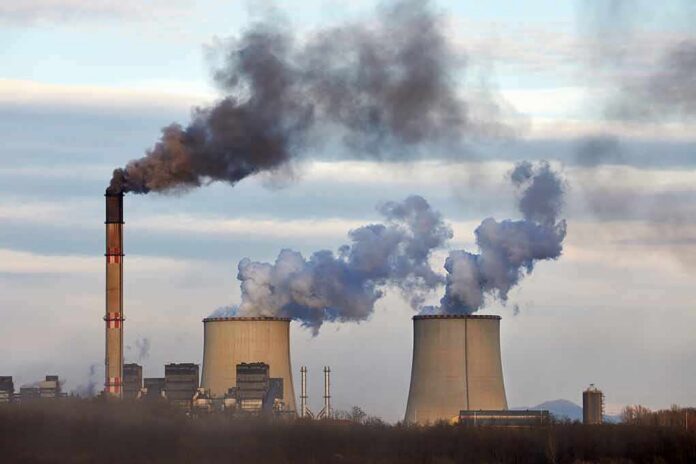
The Trump administration’s Environmental Protection Agency says coal and gas power plants no longer count as a “significant” danger to the air Americans breathe, and it wants to erase a decade of costly climate rules because of it.
Quick Take
- The EPA proposed repealing greenhouse gas rules for fossil-fuel power plants, saying they don’t significantly add to dangerous pollution.
- The move targets 2015 and 2024-era power plant standards and opens the door to undoing the 2009 “endangerment finding.”
- A separate EPA proposal takes aim at vehicle emissions rules tied to that same 2009 finding.
- Climate scientists and Senate Democrats call the move dangerous and say it ignores settled science.
- The rule is still a proposal open for public comment and will likely face lawsuits from states and advocacy groups.
EPA Says Power Plants Don’t Pose a ‘Significant’ Danger
The Environmental Protection Agency released a supplemental proposed rule on September 17, 2026. It argues fossil-fuel power plants do not contribute significantly enough to dangerous greenhouse gas pollution to justify federal regulation. That legal theory forms the backbone of the agency’s push to repeal climate rules written during the Biden years, and it puts the question of “significance” at the center of the fight.
The proposal is not a vague political talking point. The EPA names the exact regulations it wants gone. That includes standards finalized in 2015 and again in 2024 under a different name. The agency is also asking the public to weigh in on whether it ever had the legal authority under the Clean Air Act to regulate these plants at all.
Vehicle Rules and the 2009 Endangerment Finding Also in the Crosshairs
The power plant proposal does not stand alone. The EPA separately moved to rescind the 2009 endangerment finding, the original government determination that greenhouse gases threaten public health. That same action would repeal greenhouse gas standards for cars, trucks, and heavy engines, a docket the agency opened back in 2025 and formally advanced into 2026.
Conservatives have long argued that sweeping climate mandates written by unelected regulators, rather than passed by Congress, overstepped the government’s proper role. Unwinding both the power plant rules and the vehicle standards at once signals the administration wants Congress and the courts, not agency bureaucrats, to settle how far federal climate power can reach under the Clean Air Act.
Critics Warn of Deadly Consequences
Climate scientist Friederike Otto of Imperial College London called the broader repeal effort “a rejection of the most basic laws of physics”. The Associated Press, in an analysis cited by multiple outlets, estimated the targeted power plant rules could have prevented roughly 30,000 deaths and generated $275 billion in yearly benefits had they stayed in place. The Senate Environment and Public Works Committee said the 2009 finding rested on extensive peer-reviewed science confirmed by multiple national assessments.
EPA repeals green policy, saves $1.6 trillion
In the past fiscal year, the Environmental Protection Agency estimated $1.6 trillion in savings after repealing two climate-focused policies. The EPA called it the largest deregulatory action in U.S. history. The agency rescinded the…— Patrick Laidlaw (@patrick_laidlaw) October 26, 2026
Those numbers come from advocacy groups and researchers who oppose the rollback, and they deserve a hard look rather than blind acceptance. The EPA’s own supplemental proposal is still just that, a proposal open for public comment, not a final rule locked into law. Expect states, environmental groups, and regulated industries to fight this in court once it is finalized, turning the real battle into one over the Clean Air Act’s actual limits.
Sources:
theatlantic.com, congress.gov, afro.com, nbcboston.com