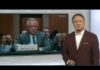

Norway’s new King Haakon VIII swore to uphold the nation’s Constitution before parliament, locking in a centuries-old check on royal power that still guards national sovereignty today.
Story Highlights
- King Haakon VIII took the required constitutional oath before the Storting in Oslo.
- The oath text pledges to govern in line with Norway’s Constitution and laws.
- The Storting scheduled and announced the ceremony for 1 pm on September 1.
- The ritual follows Norway’s rule that accession is automatic, oath follows.
Constitutional Oath Taken Before Norway’s Parliament
Norway’s King Haakon VIII took the Oath of Allegiance before the Storting, the country’s parliament, in Oslo. The Storting announced the ceremony and set the time for Tuesday, September 1, at 1 pm local time, confirming the formal step after the death of King Harald V. The oath is not optional. The Constitution requires a new king, once of age, to swear publicly that he will rule in line with the nation’s highest law. That is the point of this ceremony.
During the event, the President of the Storting read the formal notice of King Harald V’s death and the automatic succession of Haakon as the new monarch, as the Constitution provides. The ritual is part of a legal process that stretches back to 1814, when Norway set up its constitutional monarchy. The oath anchors the king’s role under law, not outside it. That message is clear to Norwegians across the political map.
What Article 9 Requires and Why It Matters
Article 9 of Norway’s Constitution sets the words of the oath and the forum. The king must swear before the Storting: “I promise and swear that I will govern the Kingdom of Norway in accordance with its Constitution and Laws; so help me God, the Almighty and Omniscient.” If parliament is not in session, the oath can be given before the Council of State. By placing the pledge in parliament, the law puts the people’s body at the center of royal accountability.
Norway’s system keeps the crown and elected leaders in balance. The monarch reigns but does not rule by whim. The oath underscores that limit. The Storting’s own guide explains that the pledge marks Norway as a constitutional monarchy, where law, not bloodline alone, is supreme. That is why the step repeats each time a new sovereign takes the throne. The tradition binds the institution to the Constitution in full public view.
How Accession and Ceremony Fit Together
Norwegian succession happens at the moment of a monarch’s death. The first in line becomes king at once. The oath comes soon after and is part of the formal record of a new reign. The Storting’s announcement for King Haakon VIII followed this pattern exactly, listing the time and place and noting the President’s role in reading the death notice and the succession before the oath was spoken. Recent history offers the same model, including King Harald’s oath in 1991.
🇳🇴 King Haakon VIII will formally swear his oath before Norway's parliament, pledging to uphold the constitution following his father King Harald's death last Friday.
Support for the monarchy has actually surged since Harald's passing, jumping from 64% to 72% in a new poll, with… https://t.co/uZv36Kasbs pic.twitter.com/ng0RhQrUlY
— NewsForce (@Newsforce) September 1, 2026
For readers in the United States, this is a useful civics mirror. Norway insists that even a king must swear to the Constitution. That principle tracks with our own belief that no leader sits above the law. While our systems differ, the shared core is national self-rule and durable limits on power. In a world of activist bureaucrats and global groups that push past voters, this simple oath still says the people hold the keys.
What Conservatives Can Learn From Norway’s Guardrails
Strong institutions protect freedom when they put law first and make leaders answer to it. Norway’s rule forces the sovereign to pledge fidelity to the Constitution in the people’s house. That is transparent, brief, and binding. America’s answer is our own oath-bound offices and the separation of powers. Both systems work when leaders respect the text and the process. When they do not, budgets bloat, borders fail, and rights erode. Oaths must mean what they say.
Sources:
youtube.com, stortinget.no, lovdata.no, en.wikipedia.org