

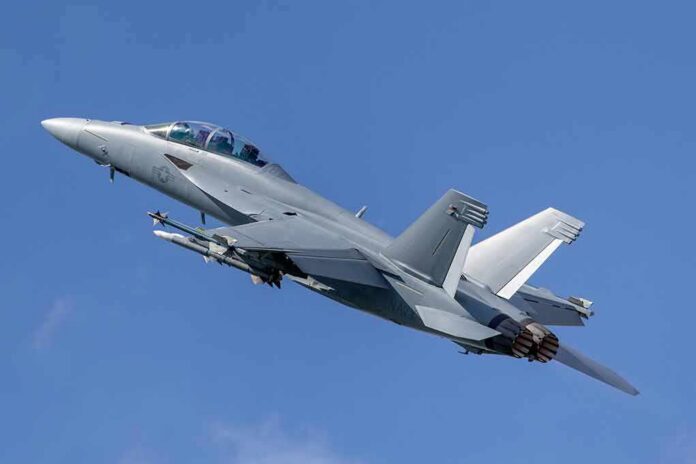
A viral claim says German Eurofighters “shot down” U.S. F-22 Raptors, but the full exercise context tells a very different story grounded in close-range rules and fuel-tank limits on the Raptor’s strengths.
Story Snapshot
- German Eurofighter Typhoons scored notional F-22 “kills” in 2012 Red Flag Alaska close-range drills.
- Engagements were within visual range, where stealth and long-range sensors matter less.
- Reports say F-22s carried external fuel tanks, limiting stealth and agility.
- U.S. accounts cite high overall mission success for the F-22 unit at the same event.
What The 2012 Red Flag Alaska Claims Actually Mean
German pilots reported simulated “kills” against U.S. Air Force F-22 Raptors during Red Flag Alaska in 2012. Those results came from within-visual-range dogfights, where the Eurofighter Typhoon’s tight turning and nose authority can shine. Contemporary coverage highlighted that close-in setup and celebrated the Typhoon’s performance in those specific drills. The word “shot down” in this case refers to a notional kill inside a training exercise, not live weapons. It was a learning fight, not combat.
Multiple analyses since then agree on that core point: the matchups took place after the merge, where the Raptor’s key edge—stealth that helps it see first and shoot first—gets muted. Writers who revisited the event stressed that the Eurofighter’s wins do not prove overall superiority, but rather show how any jet can be pressed when its strengths are limited by scenario rules. That is why one training vignette should not be turned into a blanket verdict on either aircraft.
The Fuel Tank Factor And Why Loadout Matters
Several reports say the F-22s flew with external fuel tanks during parts of the exercise. External tanks increase range, but they can add drag and enlarge radar signature. They also can limit the most aggressive maneuvers until jettisoned. Analysts tied those tanks to the Raptor’s reduced advantage in the dogfight drills that produced the notional losses. German pilot quotes from that period also emphasized how their Typhoons dropped their own tanks to be as agile as possible up close.
This detail matters for readers who want the truth, not hype. Real combat tactics would try to keep the Raptor out of a knife fight, using stealth and sensors to control the terms of the engagement at distance. A tanked F-22, forced to stay close, is not the same as a clean Raptor using long-range detection and missiles. That difference explains how both claims can be true at once: Typhoon wins up close in drills, while the Raptor dominates when it fights its fight.
How To Read Exercise Scores Without The Spin
Red Flag Alaska exists to stress-test pilots, plans, and gear in a safe, simulated fight. Units run many missions under different rules. Germany later cited an eye-catching score from one defensive mission and credited Eurofighters with many simulated kills, while noting F-22s added more wins that were not publicly tallied. U.S.-leaning summaries also described the F-22 detachment completing a high number of sorties with a very strong mission success rate at the same event.
Serious readers should treat any single vignette as one data point. Close-range dogfights tell us about pilot skill and handling at the merge. Long-range runs show who finds, fixes, and fires first. Both matter. But it is wrong to turn a few within-visual-range drills into a claim that stealth no longer works. The fair reading is this: the Eurofighter proved dangerous up close; the Raptor remains built to win before “up close” ever happens.
Why This Matters For American Air Superiority
Allies train hard with us so we can fight and win together. These drills reveal gaps to fix at home, not trophies to brag about online. For the American taxpayer, the lesson is clear: give our pilots the range, tactics, and upgrades they need, and keep politics and budget games out of the cockpit. When the Raptor uses its stealth and sensors as designed, it shapes the fight in our favor. That is deterrence you can bank on.
Sources:
nationalsecurityjournal.org, 19fortyfive.com, nationalinterest.org, flightglobal.com