

Federal prosecutors say an Atlanta man whose fentanyl sentence was commuted in 2024 is back in court on a new fentanyl charge less than two years later.
Story Snapshot
- Justice Department filed a new federal drug complaint against Walter Lee Muhammad on August 7, 2026.
- Muhammad’s 2020 fentanyl-trafficking sentence was commuted in December 2024.
- Authorities tied the new case to a large fentanyl seizure in the Southeast.
- Complaint-stage charges rely on probable cause and can lead to indictment later.
What Prosecutors Allege In The New Case
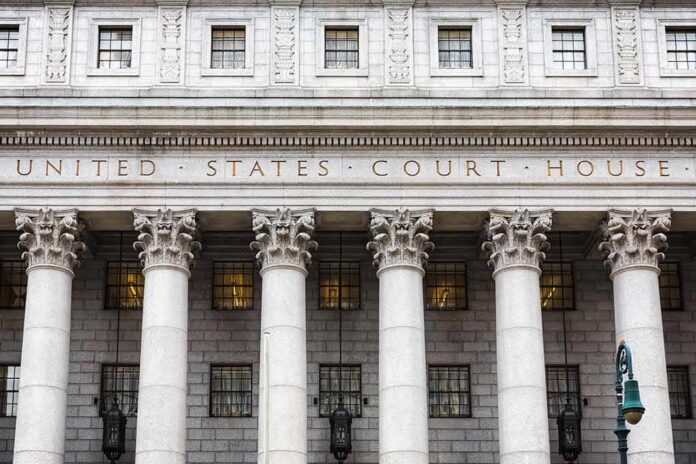
The U.S. Attorney’s Office in Atlanta said a federal criminal complaint was filed on August 7, 2026, charging Walter Lee Muhammad, 46, with possession with intent to distribute controlled substances. The office stated Muhammad appeared in federal court on a new fentanyl-trafficking charge. The announcement emphasized that Muhammad has multiple prior drug convictions and that the case involves a large fentanyl seizure tied to ongoing investigations in the region. The complaint is an early charging document and not a conviction.
Local and regional drug task forces have reported recent major seizures of fentanyl and cocaine, adding context to the scale of trafficking across nearby corridors. In Guilford County, North Carolina, a task force reported seizing about twenty-five kilograms of cocaine and four kilograms of fentanyl on August 5, 2026, and arresting two men without bond in Greensboro. The Atlanta federal complaint places Muhammad within this broader surge in fentanyl enforcement activity across the Southeast.
How A Federal Complaint Works
A federal criminal complaint is a sworn filing that alleges probable cause to believe a crime occurred and that a specific person committed it. The Department of Justice explains that complaints are often paired with an affidavit and can support an arrest warrant. A grand jury may later review the case for indictment, which is a separate step. Probable cause is a lower legal standard than proof beyond a reasonable doubt at trial, so a complaint is not the same as a conviction.
Courts and public defenders describe the complaint-to-indictment process as a common pathway in federal cases. A complaint can be the first formal step, followed by grand jury review on a timeline set by law and the court’s calendar. If a grand jury finds probable cause, it issues an indictment and the case proceeds. If the grand jury does not indict, the complaint can be dismissed. Muhammad remains presumed innocent unless and until proven guilty in court.
Why The 2024 Commutation Matters Now
The Justice Department’s notice stressed that Muhammad’s 2020 fentanyl sentence was commuted in December 2024, which reduced his punishment and led to release before the full term. Executive clemency, including commutations, has a long history and mixed results on re-arrest. A Pennsylvania study found higher re-arrest rates among people who received commutations compared with those who received pardons across earlier decades. An Oregon review of 2020 commutations recorded arrests for a portion of recipients within one year.
Atlanta drug trafficker Walter Lee Muhammad, pardoned by Biden, arrested again for fentanyl distribution after DEA agents found him with multiple bags of drugs, including 29 kilograms of cocaine and 2 kilograms of fentanyl. https://t.co/37XFgN3sfL
— America First (@007tonyc) August 17, 2026
These statistics do not judge any single case, but they explain why re-arrest after clemency quickly becomes a policy flashpoint. Many Americans on the left and right already doubt whether leaders are fixing deadly drug trends or just recycling failed ideas. Families see fentanyl deaths rise while government argues over process. When a person released early faces fresh charges tied to the same drug, it raises hard questions about screening, supervision, and public safety that cut across party lines.
What To Watch Next In Court
Next steps could include a detention hearing, discovery, and grand jury action. Prosecutors may seek to keep a defendant in custody by arguing risk of flight or danger to the community. Defense counsel can contest the complaint’s facts and the weight of the evidence. If the grand jury returns an indictment, formal arraignment and motion practice follow. If not, charges can change or end. Court filings and hearing dates will show how quickly this case moves.
The Bigger Picture On Fentanyl Enforcement
Fentanyl remains a leading driver of overdose deaths nationwide. Federal and local agencies continue high-volume seizures and multi-state cases. The Department of Justice and the Drug Enforcement Administration highlight large busts to show pressure on supply chains. Community members, meanwhile, want fewer funerals and more action that works. This case will feed the debate over how to balance second chances, strict enforcement, and real-time risks when deadly drugs are involved.
Sources:
nypost.com, justice.gov, dea.gov, youtube.com, iheart.com, islamicstudies.harvard.edu, ojp.gov, versustexas.com