

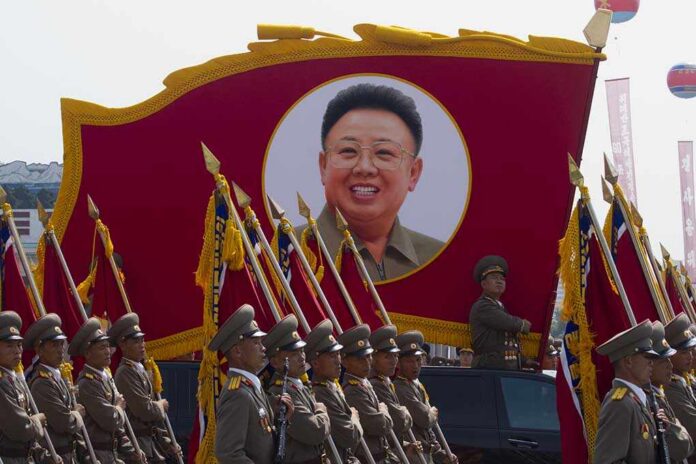
North Korea’s latest heatwave guidance mixed real health advice with the usual propaganda, and dog meat soup became the headline.
Quick Take
- Rodong Sinmun ran a health feature on coping with extreme heat.
- The advice included watermelon, cucumbers, mung beans, and dog meat soup.
- State media also paired the guidance with images of Kim Jong Un enduring the weather.
- Outside reporting says the regime has long used weather warnings to push mobilization language.
Heat Advice From State Media
North Korean state media used a record heatwave to publish concrete health guidance, not just slogans. Reuters reported that Rodong Sinmun ran an Aug. 2 feature quoting a doctor at Pyongyang General Hospital. The doctor recommended cooling foods such as watermelon, cucumbers, and mung beans, plus “nutritious foods” like dog-meat soup, fish porridge, and red-bean porridge.
That advice focused on more than food. Reuters said the paper described dog-meat soup as a traditional summer health tonic and repeated an old saying that linked the dish with medicine. Other reporting said the same state media push included first-aid guidance for heat-related illness and warnings that conditions such as cardiovascular disease, diabetes, and hyperthyroidism can worsen in extreme heat.
Propaganda Sat Next To Public-Health Warnings
The health message did not stand alone. Reuters reported that North Korean media also portrayed Kim Jong Un as a leader who endures harsh conditions alongside ordinary citizens. NK PRO said state television carried alerts through special programs, weather updates, and on-screen captions, while print outlets ran near-daily calls to guard against the heat.
That blend matters because it shows how North Korea handles crisis coverage. The same broadcast stream can carry real safety advice and regime praise at the same time. Reuters said the heat coverage returned to a familiar propaganda theme, which makes the messaging look partly practical and partly political. For readers in the United States, that is a familiar reminder of how state power can wrap itself in public service language.
Long Pattern Of Crisis Mobilization
This was not a one-off response. Reuters, the British Broadcasting Corporation, and other outlets have reported similar North Korean messaging in past heat and drought events, with language that described extreme weather as a natural disaster and urged people to join the struggle to protect crops. That history shows a repeated pattern: weather becomes both a public risk and a loyalty test.
Official and aid-group reporting also points to real emergency steps on the ground. The Climate Centre said the Democratic People’s Republic of Korea Red Cross described a developing emergency and reported plans to deploy 20 mobile water pumps for emergency irrigation. Reuters also noted earlier reports of irrigation repairs, new wells, and reservoir work, showing that at least some material response was underway.
Due to heat wave in North Korea:
Kim propaganda recommends dog meat soup+++Pyongyang: – More than 40 percent of the 26 million North Koreans suffer from hunger, because food shortages and malnutrition are part of the harassment that the Kim dictatorship applies against its own… pic.twitter.com/asI2f7hQek
— LiberlandPress (@PressLiberland) August 11, 2026
Still, key limits remain. The available reporting does not show whether the advice reduced heat illness, whether citizens could act on it widely, or how severe the human toll actually was. NK PRO said no outlet reported heat-related casualties, but that is not the same as proof that no harm occurred. The dog-meat recommendation is also culturally specific, and the sources do not provide clinical evidence that it is needed or better than other measures.
Sources:
zerohedge.com, reuters.com, cnn.com, bbc.com, koreatimes.co.kr