
When gunfire repeatedly targets a fortified diplomatic building in the heart of a major city, the core story is not the number of bullets but the emerging pattern of high‑risk, high‑speed attacks that law enforcement is now forced to treat as national security events rather than ordinary street crime.
At a Glance
- Shots have been fired at the U.S. consulate in downtown Toronto twice in four months, both times with no injuries but clear physical evidence of gunfire.
- The March shooting was formally designated a “national security incident” and linked to a wider “criminals‑for‑hire” network; the July attack triggered a high‑speed pursuit that police suspended for safety reasons.
- Multi‑agency teams now handle these cases, reflecting the protected status of diplomatic missions and the possibility of foreign‑directed or hate‑motivated violence.
- The absence of casualties and limited public detail can obscure how serious these incidents are for policing, intelligence cooperation, and community confidence.
Two Incidents, One Target: What Actually Happened
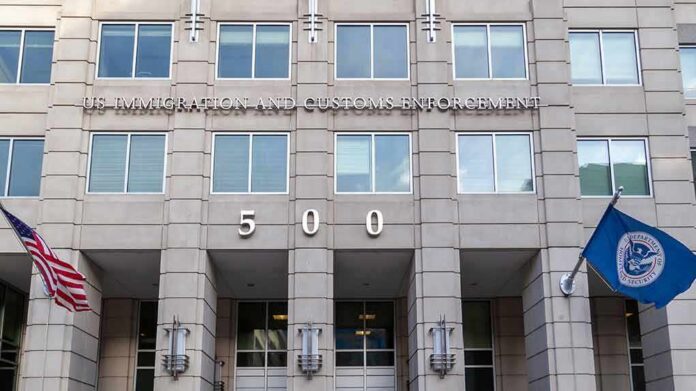
The public record is clearest on the basic facts: there have been two confirmed shootings associated with the U.S. consulate in Toronto within a four‑month span, one in March and one in late July. In both cases, gunfire was directed at or near the consulate’s downtown compound on University Avenue, and in both cases, investigators found physical evidence consistent with a real attack, not a rumor or false alarm.
The March incident unfolded in the pre‑dawn hours when a white Honda CR‑V pulled up alongside the consulate and two men exited the vehicle. According to Toronto police and subsequent national reporting, both men fired multiple rounds from a handgun toward the building’s facade before getting back into the SUV and driving away. Officers and consulate staff later confirmed shell casings and damage to the building, and importantly, noted that there were people inside at the time, protected by the heavily fortified structure. No injuries were reported.
The July incident was different in scale but similar in pattern. Around 4:45 a.m., a Toronto police officer posted near the consulate heard a single gunshot and observed a white late‑model Honda Accord without licence plates speeding away from the area. Investigators recovered one shell casing and identified damage to the building’s front facade, consistent with one projectile striking the structure. Again, no one was injured, but the physical evidence confirmed that at least one round had been fired at or immediately adjacent to the consulate.
Taken together, these two episodes establish a clear continuity: the same diplomatic facility, similar timing, handgun fire at close range, escape by late‑model white sedans, and reliance on hardened infrastructure and luck rather than good intent for the absence of casualties.
From Crime Scene to National Security Incident
Diplomatic compounds are not treated like ordinary commercial buildings under Canadian law and policing practice; they are internationally protected premises, and any attack on them carries implications that reach beyond local crime statistics. This is reflected in the language used after the March shooting. Senior RCMP and Toronto police officials explicitly labeled the incident a “national security incident,” triggering formal involvement by federal policing and intelligence units.
That label does not mean a court has found terrorism or foreign direction; it means that, operationally, the incident meets thresholds for protected‑target concern, potential geopolitical impact, or suspected organized activity. Reporting from CBC, Bloomberg, and others makes clear that federal teams including the Integrated National Security Enforcement Team and CSIS counterparts became part of the investigative architecture around the March attack.
As the March case developed, the national‑security framing gained more substance. A 19‑year‑old suspect, identified in BBC coverage as linked to the consulate shooting, was arrested and charged with offences including attacking an internationally protected location. Parliamentary statements went further: a junior minister told the House of Commons that the individuals involved in the gunfire were “compensated and contracted by a foreign organization,” suggesting investigators had at least some intelligence pointing to external direction or funding.
Police briefings and later analysis also situated the consulate shooting within a broader pattern of “criminals‑for‑hire” activity in the Greater Toronto Area, involving hired young offenders filming attacks on synagogues, Jewish schools, businesses, and the consulate itself. That pattern, if borne out by court records, turns what might look like a discrete shooting into a node in a networked campaign of violence against protected and minority targets.
The July Shooting: High-Speed Chase, Deliberate Restraint
The July incident did not immediately receive the same national‑security label, but the response again reflected elevated concern. Once the officer at the consulate heard the shot and saw the white Honda Accord flee, police initiated a pursuit through downtown streets and onto the Don Valley Parkway, reaching speeds in excess of 140 km/h. This is not a routine traffic stop; it is a high‑risk intervention prompted by gunfire at a diplomatic mission.
Yet the pursuit ended not with an arrest but with a judgment call. As the suspect vehicle approached Don Mills, the speed and traffic environment crossed the thresholds laid out in Toronto Police Service pursuit protocols, and supervisors ordered the chase terminated to protect the public. In later briefings, Deputy Chief Frank Barredo underscored that decision: the risk of collision with uninvolved motorists outweighed the potential immediate benefit of apprehending the suspect at that moment.
Operationally, this is where high‑profile security incidents intersect with everyday policing realities. Even when the target is a U.S. consulate, officers are bound by pursuit policies designed to prevent highways from turning into lethal enforcement corridors. The evidence recovered at the scene—one shell casing, one impact point on the facade—gives investigators a starting point, but the suspect remains at large, and the case shifts from hot pursuit to manhunt.
This choice has consequences. On one hand, it reflects a mature safety culture: Toronto has learned from past tragedies that uncontrolled high‑speed chases can do more harm than the crimes they respond to. On the other, it leaves community members, and especially those at symbolic or minority targets, feeling exposed when well‑armed attackers can escape despite heavy police presence.
Protected Targets, Hired Guns, and Community Fear
The two consulate shootings do not exist in isolation. They appear alongside a cluster of incidents in which synagogues, Jewish schools, and Jewish‑owned businesses across Toronto have been shot at or vandalized, often at night, with few injuries but visible damage. In several of these cases, witnesses reported dark SUVs or sedans driving up, discharging rounds, and speeding away—echoing the modus operandi at the consulate.
Community leaders and advocacy organizations have drawn a straight line between this pattern and broader geopolitical tensions, especially conflicts in the Middle East, pointing to data that Jewish communities remained the most targeted group for religiously motivated hate crimes in Toronto in 2025.[Jewish-business, police data summarized in user research] Police and federal agencies, for their part, have publicly acknowledged the possibility of hate motivation while also emphasizing the emerging “criminals‑for‑hire” model, where relatively young attackers are paid to carry out and film these acts for distant organizers.
That distinction matters. If the attackers are ideologically motivated locals, the primary policy levers are counter‑radicalization, community engagement, and domestic law enforcement. If they are paid contractors working for foreign entities, the necessary response expands to include counter‑espionage, sanctions, and cross‑border intelligence cooperation. The consulate cases sit at that junction: they look operationally like hired hits on a symbolic target, but attribution to specific foreign organizations, while asserted by at least one minister, has not yet been fully laid out in public, court‑tested form.
Why “No Injuries” Does Not Mean “Not Serious”
Across both incidents, police have stressed that there was “no immediate threat to public safety” and that no injuries occurred. That messaging is standard for briefings: it calms residents and discourages panic. Yet it can mislead in one respect. The absence of casualties in these cases is due less to benign intent than to timing, targeting choices, and fortification.
The consulate is a hardened facility, designed precisely to absorb gunfire and bomb blasts that would devastate ordinary buildings. People were inside during the March attack; they were simply shielded by physical security layers. In July, the shot was fired in the near‑empty dawn hours, when staff and visitors were minimal. If similar attacks were attempted at mid‑day against less protected sites—schools, houses of worship, small businesses—the casualty profile could look very different.
Furthermore, “no immediate threat” refers to the absence of an ongoing active shooter or broader coordinated assault at the moment of the briefing. It does not mean the attackers pose no continuing risk, or that the pattern of targeting internationally protected and minority sites is anything less than serious.
Transparency, Limits, and the Evidence Gap
From an evidentiary standpoint, what the public sees remains partial. Most of what we know comes from police press conferences, wire service reporting, and television coverage, not from primary documents like occurrence reports, ballistic lab files, or sworn witness statements. We know there were shots, we know there were casings and facade damage, we know pursuit speeds and vehicle models, we know one suspect from March faces charges tied to attacking a protected location. We do not yet have a full forensic inventory, CCTV compilations, or court‑tested narratives tying every round fired to specific individuals and sponsors.
National‑security classification complicates transparency. Once an incident falls under that umbrella, agencies are more likely to withhold operational detail—sources and methods, intelligence assessments, link analysis—even when the public would benefit from understanding the basic outlines of the case. The result is a gap between the gravity of official language and the granularity of evidence available to outside observers.
That gap carries risk. It can feed speculation, partisan amplification, and conspiracy theories, especially when foreign‑direction is hinted at but not fully documented in open court. It can also erode confidence among affected communities who see severe impacts—raids, officer deaths, heightened patrols—but only partial explanations. Yet the alternative, full immediate disclosure, may genuinely compromise live investigations or international cooperation.
What These Incidents Mean Going Forward
For Toronto, the repeated targeting of the U.S. consulate crystallizes several longer‑term challenges. First, the city must manage the security of symbolic and minority sites—consulates, synagogues, Jewish businesses—without turning its downtown core into a militarized zone or undermining civil liberties. Second, police pursuit policies and resource allocation (including aerial support) will be scrutinized when high‑profile suspects escape after attacks on internationally protected missions.
For Canada and the United States, the incidents underscore the practical reality of cross‑border security integration. Multi‑agency teams already involve the RCMP, CSIS, local police, and U.S. partners such as the FBI and State Department; repeated attacks on a U.S. facility on Canadian soil only deepen that cooperation. How effectively those teams can disrupt “criminals‑for‑hire” networks, identify foreign contractors, and deter copycat attacks will shape both public confidence and diplomatic relations.
Finally, for residents—especially those in Jewish communities and downtown workers—the shootings serve as a reminder that contemporary security threats often blur lines between hate crime, organized crime, and geopolitics. When a single bullet triggers a high‑speed chase that must be suspended for safety, the message is clear: the infrastructure of public safety is working, but the margin for error is thin. Understanding these incidents in full—not just as headlines, but as part of an evolving pattern—is essential to any serious discussion of how a city protects both its people and its most symbolically charged places.
#NationalSecurity: Toronto Police Investigate After Shots Fired Outside U.S. Consulate In📍Toronto. Suspect(s) Fled In A White Sedan Was Seen Fleeing.🇨🇦🇺🇸
Previous Shooting At The Consulate Was A Terrorist Attack Alleged To Be Directed By Kata’ib Hezbollah Commander Mohammad… https://t.co/5djUJYQIRi pic.twitter.com/1Z8HkxcbEY
— 401_da_sarpanch (@401_da_sarpanch) July 27, 2026
Sources:
insiderpaper.com, nytimes.com, youtube.com, washingtonpost.com, bbc.com, cbc.ca, bloomberg.com, politico.com, usnews.com, kfoxtv.com