

Stories of rattlesnakes lurking under delivery packages may sound freakish and one-off, but in places like Santa Clarita they sit at the intersection of a real ecological pattern, modern logistics, and media incentives that reliably turn rare hazards into memorable fear.
At a Glance
- The reported bite of a 3‑year‑old by a rattlesnake hiding beneath an Amazon package fits known regional snake behavior, even though the specific case currently rests on a single media account.
- Southern Pacific rattlesnakes are common in the Los Angeles–Santa Clarita corridor and routinely use “artificial cover” such as yard clutter, play equipment, and packages as shelter.
- Confirmed “snake-in-package” incidents are rare but real; they highlight how contemporary delivery habits extend our exposure to wildlife rather than creating an entirely new risk category.
- Media and social platforms amplify these episodes with dramatic framing, while practical prevention and emergency response guidance from local experts remains comparatively underexposed.
A Child, a Package, and a Hidden Snake: What We Actually Know
The New York Post describes a Santa Clarita incident in which a 3‑year‑old girl, Addy, ran outside to retrieve a gift left in an Amazon package and was bitten on her left side by a Southern Pacific rattlesnake concealed beneath a brown padded envelope. At present, every public detail about this bite—location, species, package involvement, and sequence of events—derives from the father Manuel Barajas’s account as relayed by that single outlet. There are no available emergency department records, wildlife agency incident logs, or law-enforcement reports in the public domain that independently confirm the bite, the envenomation, or the precise species.
That absence of corroboration does not make the story false; it simply means the case sits in an evidentiary gray zone where we have a plausible narrative supported by local ecology but not yet anchored by official documentation. In this zone, an expert approach is less “did this happen exactly as described?” and more “is this scenario consistent with what rattlesnakes do, what delivery practices look like, and how similar cases have unfolded?” On all three counts, the answer is yes—but with caveats.
Southern Pacific Rattlesnakes and the Santa Clarita Landscape
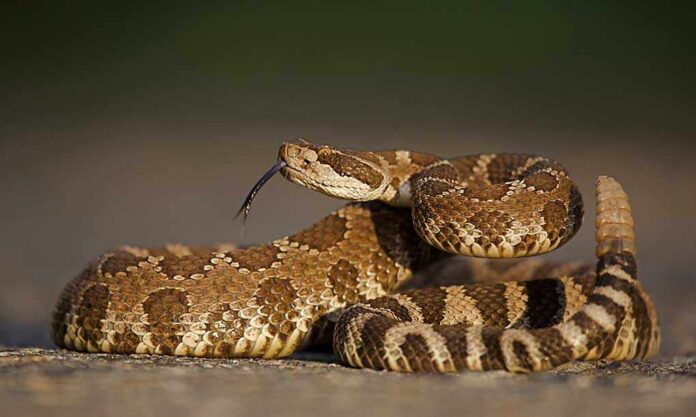
To understand why a rattlesnake under a package is plausible in Santa Clarita, you have to start with the species involved. The Southern Pacific rattlesnake (Crotalus oreganus helleri, historically Crotalus helleri) is the dominant venomous snake across much of coastal and foothill Southern California, including Los Angeles County and its valleys. Herpetologists and park resources describe it as a heavy-bodied pit viper, typically brown, tan or black with darker dorsal blotches—perfect camouflage against soil, mulch, or faded cardboard. These snakes favor chaparral and dense vegetation but are explicitly documented as using “urban” habitats and “artificial cover” such as rock piles, wood stacks, and man-made debris.
Local guidance aimed at residents in the greater Los Angeles and San Diego regions treats Southern Pacific rattlesnakes as a routine part of the environment in warm months, not a wilderness curiosity. Rattlesnake season in the Los Angeles basin typically runs from March through October, and experts emphasize that encounters increase with heat and human activity near the edges of open space. In the Santa Clarita Valley, one snake-avoidance program estimates 150 to 300 pet envenomations annually, an underreported but telling proxy for how often snakes traverse yards, patios, and kennels rather than remaining in distant hills.
From a behavior standpoint, Southern Pacific rattlesnakes are not “stalkers”; they are ambush predators that seek cover and strike when threatened or accidentally disturbed. Local herpetologists note that when approached, these snakes will often coil “against an object”—a wall, a rock, a toy—because backing into something gives them a sense of security while they track the perceived threat. Substitute a brown padded shipping envelope or box for that “object” and the behavior remains essentially the same.
Snake-in-Package Incidents: Rare, but Not Imaginary
The idea of a rattlesnake associated with a modern parcel delivery system can sound like clickbait, yet there are documented cases where a venomous snake and a package are directly intertwined. In 2024, a Mojave Desert post office received a package marked “fragile” that turned out to contain a live Western rattlesnake; postal tracking linked the box to a route originating in Hayward, California. This was not a spontaneous wild encounter but an intentional, illegal shipment—an altogether different context, but it proved that venomous snakes and parcels do sometimes share the same physical space.
On the service side, multiple verified incidents show rattlesnakes striking Amazon drivers as they approach porches and yards in the Sunbelt. In Florida, a driver was hospitalized in “very serious condition” after being bitten by an eastern diamondback while dropping a package near a customer’s door. Here the packages themselves were not the snakes’ shelter; instead, both snake and driver were exploiting the same human-modified microhabitat—shaded entries, landscaping, and clutter—at the same moment.
What remains extremely rare is the specific scenario of an unplanned, wild rattlesnake coiling directly beneath or within a delivery package that a child or adult then lifts, resulting in a bite. Wildlife agencies do not track “package-origin” bites as a separate category; rattlesnake incidents are recorded by medical outcome and location, not by object involvement. That means we cannot assign a meaningful probability to this exact configuration. We can say, however, that rattlesnakes routinely shelter under low cover in yards, that packages now occupy the same ground more often than in the pre-e-commerce era, and that “snake plus package” has already produced at least one confirmed mail-room surprise.
Preschools, Playgrounds, and a Second Santa Clarita Rattlesnake
The Amazon-package bite account exists against a backdrop of another, better-documented rattlesnake scare in the same region: a venomous snake inside a preschool playhouse in Saugus, a neighborhood of Santa Clarita.[KTLA video; Megan video] In that case, a child noticed the snake, alerted a teacher, and a local removal expert—variously identified as Carrie or Kerry, operating a rattlesnake-avoidance and dog-training service—responded with tools, safely capturing the coiled rattlesnake on the CBS Preschool playground. No one was injured, but video evidence and on-site professionals left little doubt about what happened.
This preschool incident matters for two reasons. First, it demonstrates that rattlesnakes do penetrate child-focused environments in Santa Clarita, not just trailheads and backyards. Second, it shows exactly the type of structure snakes favor: a small, shaded playhouse offering tight corners and visual concealment—conceptually similar to the shelter provided by a package resting on warm ground near a wall or bush. Taken together with documented residential removals and local cautionary videos about “rattlesnake season,” it reinforces the idea that Santa Clarita’s human spaces and rattlesnakes share more overlap than many parents assume.
Media, Fear, and the Evidence Gap
The New York Post’s headline—“Father’s terrifying warning as 3-year-old is bitten by rattlesnake lurking under Amazon package”—is engineered to do what tabloid headlines do: compress a story into fear and novelty. The words “terrifying,” “lurking,” and the invocation of a familiar brand name activate a particular kind of concern: this could happen to my child, at my doorstep, triggered by an everyday action. From an engagement perspective, the formula works; from an evidentiary perspective, it leaves important questions unanswered.
We do not yet have medical confirmation of envenomation in Addy’s case, such as documentation of antivenom administration or venom assay results. There is no public wildlife report describing capture or identification of a Southern Pacific rattlesnake at the scene, nor any statement from Amazon about delivery specifics or driver observations. None of these absences prove the narrative wrong; emergency departments and agencies rarely publish detailed case summaries for a single snakebite unless litigation or broader public-health messaging is involved. But they do mean that, for now, the event should be treated as a plausible, unverified account rather than a fully documented incident.
This matters because sensational framing tends to freeze stories in a particular emotional posture. Once the image of a rattlesnake under an Amazon envelope is lodged in public imagination, any later nuance—say, a clarification that the snake was nearby rather than directly under the package, or that the bite was dry with no venom—struggles to compete. Conversely, institutional silence from Amazon or local agencies risks being interpreted as tacit admission or indifference, when in reality it may simply reflect standard practice of not commenting on individual minor injuries.
Practical Risk, Not Paralyzing Fear: How to Think and Act
For adults making sense of these stories, the key is to distinguish between narrative rarity and practical preparedness. The precise scenario of your child lifting a package and exposing a rattlesnake is extremely unlikely; the broader scenario of encountering a rattlesnake somewhere in your yard, on a trail, or near a preschool play structure in Santa Clarita is routine enough that local experts devote entire outreach programs to it.
Prevention starts with habitat management and habits. Fire departments, wildlife agencies, and local herpetologists consistently advise keeping yards free of thick brush, wood piles, and miscellaneous debris that create hiding places; closing dog and garage doors; and avoiding sandals and bare feet in brushy areas. Delivery culture adds a small twist: packages often land near walls, bushes, or steps—the same zones snakes favor for cover. Simply scanning the area before children rush to grab a box, and teaching them to pause rather than sprint, is a rational adjustment rather than a response to any single sensational story.
If a bite occurs, the guidance is unambiguous. Call 911 or seek immediate emergency care; do not cut, suck, tourniquet, or ice the wound, and remove constricting jewelry or clothing as swelling begins. Modern antivenoms and supportive care make survival highly likely, and a significant minority of rattlesnake bites are “dry,” involving no venom injection at all. Time, as one Santa Clarita medical expert put it, is tissue: the faster the victim reaches appropriate care, the more function is preserved.
What This Means Going Forward
Episodes like the reported Amazon package bite are best understood as boundary cases in a much larger, ongoing negotiation between human settlement and wildlife. Southern Pacific rattlesnakes are not invading a previously safe landscape; humans have extended our living, schooling, and delivery systems deeper into their range, then populated those spaces with tempting microhabitats—playhouses, porch clutter, and yes, packages. Rattlesnakes are simply using what we provide.
For communities like Santa Clarita, the long-term response is neither panic nor dismissal, but normalization of expertise. Snake-removal professionals, dog-rattlesnake avoidance trainers, and wildlife educators already act as informal infrastructure, keeping encounters from becoming tragedies. The more their practical guidance shapes everyday behavior—how we clear yards, where we let children play unattended, how we approach packages left in rough corners—the less power sensational narratives have to distort our sense of risk.
In that sense, the story of a rattlesnake under an Amazon envelope is less a freakish anomaly than a vivid reminder: modern conveniences do not erase the ecology around us. They sit on top of it. Living well in regions like Santa Clarita means keeping both layers in mind.
Sources:
nypost.com, theguardian.com, abcnews.go.com, cbsnews.com, kiro7.com, tcpalm.com, weartv.com, youtube.com, thesnakeschool.com, hometownstation.com