

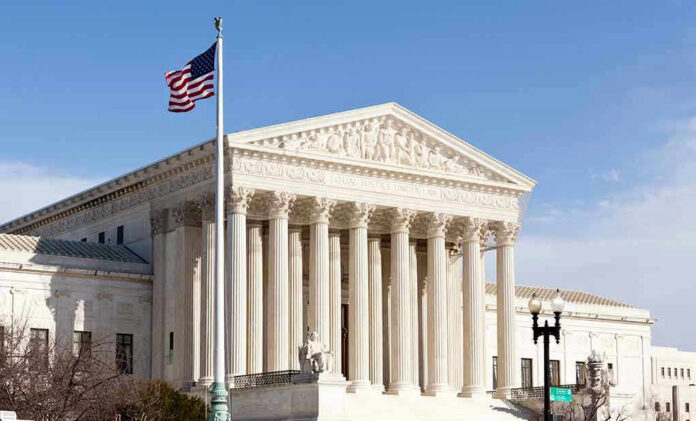
An unsealed letter shows Justice Antonin Scalia fiercely defending the Smith ruling on religious liberty, reigniting today’s fight over how far government can reach into faith.
Story Snapshot
- Newly revealed letter shows Scalia’s private resolve to defend Employment Division v. Smith.
- Smith held that neutral, general laws do not trigger religious exemptions under the First Amendment.
- Congress later passed the Religious Freedom Restoration Act to restore stronger protections, signaling backlash.
- Some conservative scholars still call Smith a serious mistake, keeping the debate alive.
What the Unsealed Letter Adds to the Record
Washington Times reporting says a 2026-unsealed letter from Justice Antonin Scalia captures his fierce private defense of the Supreme Court’s 1990 Employment Division v. Smith ruling. The letter, sent to law professor Nadine Strossen, appears to show Scalia’s confidence in the decision against rising criticism. The full text and date are not public. That limits what we can verify. But the letter’s existence anchors what many suspected: Scalia believed Smith’s rule protected the Constitution’s structure, not government power.
Employment Division v. Smith said the Free Exercise Clause does not require religious exemptions from neutral, generally applicable laws. Scalia’s opinion stressed that courts should not judge the “centrality” of a believer’s practice, just as they should not grade the “importance” of an idea in free speech cases. He wrote that prior cases never held that belief alone excused people from valid, general laws. He argued that carving exemptions by case-by-case balancing would create a constitutional anomaly and invite judicial overreach.
How Smith Reshaped Religious Liberty Battles
Smith was a six to three decision, with Justice Sandra Day O’Connor joining the judgment but not the opinion, showing notable consensus at the time even with sharp disagreement on reasoning. The ruling pulled free exercise doctrine away from constant strict scrutiny. It put the task of crafting exemptions mostly back in the hands of voters and lawmakers. That choice aimed to keep judges from picking winners and losers in matters of faith and public rules.
Congress reacted three years later. The Religious Freedom Restoration Act sought to restore the compelling interest and least restrictive means test that Smith set aside for neutral laws. Lawmakers said government may burden religion only when it meets that test, and only as a last resort. That move showed a strong legislative push to shield religious Americans from one-size-fits-all rules. Later cases limited how far that statute reaches, especially against states, but the federal law still stands in many areas.
Why the Debate Still Matters to Conservatives
Some conservatives back Smith because it ties judges to text and history and forces elected officials to write clear protections for faith. That approach can fit a small-government view. It checks judicial activism and keeps national elites from inventing tests that move with the news cycle. It also guards free speech by keeping courts from ranking what beliefs matter most, a task they are not equipped to do and that the Constitution does not assign.
Other conservative scholars say Smith went too far. Law professor Michael Stokes Paulsen blasted the ruling as “dreadful” and a “constitutional disaster,” arguing it drained the Free Exercise Clause of needed force and undercut people of faith when rules collide with conscience. That pushback helped fuel the political drive for the Religious Freedom Restoration Act and state-level protections. The split on the right has lasted for decades and shapes current fights over education, medical mandates, and workplace rules.
What the Letter Cannot Settle—and What It Clarifies
The letter’s limits are real. The public does not yet have the full text, the date, or the precise target of Scalia’s rebuttal. That makes it hard to weigh each claim he made against his public writings. Still, the letter clarifies his posture. He did not hedge in private while standing firm in public. He believed the First Amendment guards belief and worship, but does not grant courts a roving license to rewrite general laws through exemptions case by case.
For readers who want both liberty and order, the core tension remains. Who draws the line when a neutral rule pinches faith practice—the judge or the lawmaker? Smith answered: the lawmaker, unless the law targets religion. Congress answered back with broad statutory shields. Today’s lesson is simple. If we want lasting protection of faith in daily life, we must write it into clear laws and elect leaders who will defend it—before regulators or courts chip it away.
Sources:
washingtontimes.com, constitutioncenter.org, judicature.duke.edu, supreme.justia.com, youtube.com