

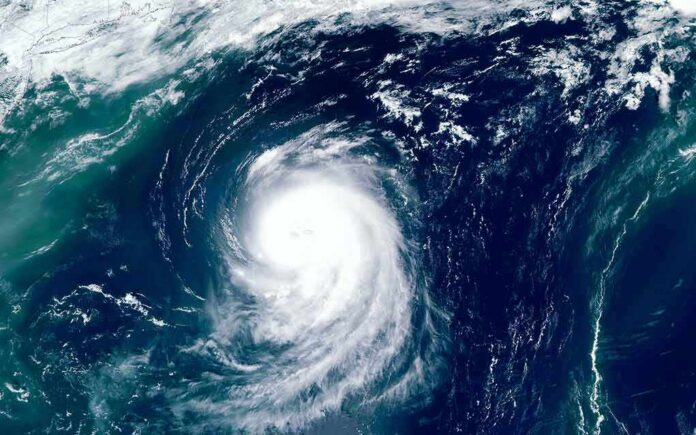
Taiwan issued a land warning for Typhoon Champi as airlines canceled more than one hundred flights and officials warned of dangerous winds and rain through Saturday.
Story Snapshot
- Taiwan’s Central Weather Administration issued land and sea warnings as Champi neared.
- Officials forecast heavy rain and strong winds, especially in southern and offshore areas.
- Transport authorities reported about 125 flight cancellations, mostly domestic.
- Forecasters said the storm could track offshore while still bringing severe gusts.
Official Warnings and Areas of Greatest Risk
Taiwan’s Central Weather Administration issued a land warning on October 22 as Typhoon Champi approached the island. Officials said heavy rain and strong winds were likely through Saturday, with the worst effects expected across parts of southern Taiwan and offshore islands. The agency also flagged earlier sea warnings for the Bashi Channel and waters east and north of Taiwan. Ships were told to stay alert and avoid risky routes as waves and gusts built on approach.
The weather service identified Pingtung County and the outlying Penghu, Orchid, and Green islands for hazardous winds. The advisory called for sustained winds near 75 kilometers per hour and gusts up to 103 kilometers per hour in these areas. Local governments urged residents to secure loose items, prepare for power issues, and watch for coastal flooding. Emergency crews pre-positioned gear and checked drainage in known flood zones. Fishing fleets moved to safer harbors where possible, reducing exposure to strong surf and spray.
Transport Disruptions as Airlines Adjust Schedules
Air travel faced early disruption as carriers adjusted schedules ahead of the storm. China Airlines and Tigerair Taiwan canceled or changed flights on routes between Taiwan and Okinawa. Domestic operators, including Uni Air and Mandarin Airlines, cut or shifted flights serving Penghu, Kinmen, Matsu, and other short-haul routes. Taiwan’s transport ministry later reported about 125 canceled flights, mostly domestic services, while rail lines remained open and on schedule for now. Travelers were told to check with airlines before heading to airports.
The cancellation totals varied across reports, in part due to timing and whether regional counts included flights outside Taiwan. Some outlets referenced more than 200 cancellations across the broader region, while the ministry’s figure focused on Taiwan’s network on Thursday. Such gaps are common during storms as numbers change by the hour. Airports and airlines said more changes were possible if winds strengthened or if runways and ground crews faced unsafe conditions during peak gusts.
Storm Intensity, Track Uncertainty, and Safety Guidance
Champi weakened slightly as it neared Taiwan, but it still produced very strong gusts near its center. Taiwan’s weather agency cited winds over 227 kilometers per hour around the core, showing the storm’s power even as it lost some strength. Forecast maps showed the center could pass near the island’s northeast coast while trending north. That track would keep the worst core winds offshore but still drive heavy rain bands and dangerous surf into parts of Taiwan.
Forecasters also noted the track could shift, which is normal in tropical systems. Some models pointed to a path farther west, which would bring stronger winds onshore, while others kept the center offshore to the northeast. Authorities framed the warnings to prepare the public without assuming a single outcome. That approach matches global guidance that urges clear alerts while admitting forecast uncertainty, so people act early and avoid last-minute rushes.
Why This Matters for People on the Ground
Storm warnings have real costs for workers, families, and small businesses. Flight cancellations cut income for hourly staff and strand travelers. Yet early moves reduce the chance of injuries at airports or on ferries and fishing boats. Taiwan’s rail network staying open offered a safer option for many riders on Thursday. Local officials balanced the economic hit against the risk that heavy rain and gusts could topple scaffolds, snap lines, and make roads unsafe in a hurry.
Taiwan issues land warning, cancel more than 100 flights ahead of arrival of Typhoon Champi https://t.co/AQXgIXybIq
— The Straits Times (@straits_times) October 22, 2026
For readers in the United States, this is a reminder that clear, steady messages matter during danger. Government agencies must share plain facts, update often, and admit what they do not yet know. People need to hear what to do today, not only what might happen two days from now. Taiwan’s warnings, airline steps, and steady rail service show how layered decisions can keep people moving while reducing risk as a strong storm brushes a crowded island.
Sources:
youtube.com, focustaiwan.tw, rti.org.tw, newsobserver.com, taipeitimes.com