
A viral Yellowstone video of a bison launching a tourist into the air is a fresh, painful reminder that ignoring basic rules around wild animals can turn a family vacation into a near‑tragedy in seconds.
Story Snapshot
- Yellowstone visitors are legally required to stay at least 25 yards away from bison and other large wildlife.
- Bison have injured more people in Yellowstone than any other animal, often when tourists crowd them for photos.
- Recent attacks on a 12-year-old child and several adults followed people getting too close to these huge, fast animals.
- Park officials stress personal responsibility and common-sense distance instead of more federal crackdowns or new rules.
Bison Attacks Show Why Yellowstone’s Distance Rule Matters
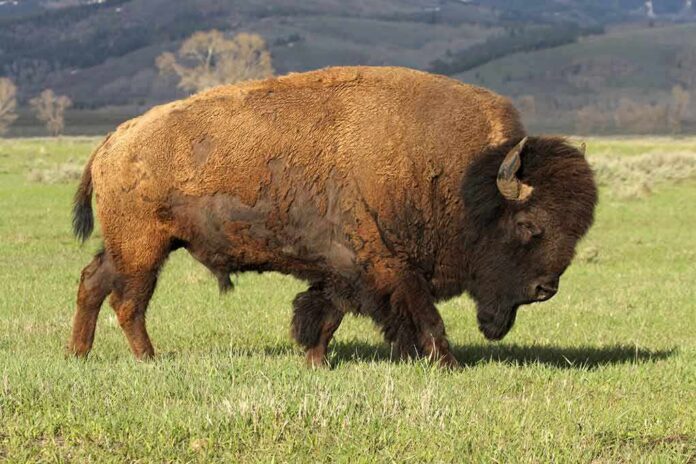
Yellowstone National Park’s own rules could not be clearer: it is your responsibility to stay more than 25 yards away from bison, elk, bighorn sheep, deer, moose, and coyotes, and at least 100 yards from bears and wolves. Those numbers are not about “woke safety theater.” They come from hard lessons, real injuries, and the simple fact that a one‑ton animal that can sprint three times faster than a human will win any race you start at 10 feet. When people cross that line, nature does not care about feelings, social media clout, or tourist schedules.
National Park Service data and Centers for Disease Control reports show a clear pattern: bison hurt people mostly when visitors walk right up to them for a closer look or a selfie. Between 1978 and 1992, bison injured 56 visitors in Yellowstone and killed two. From 2000 to 2015, at least 25 more people were hurt. A 2019 analysis found bison are now the number one source of wildlife injuries to pedestrians in the park, beating even bears, which most tourists fear more. This is not random bad luck; it is repeat human behavior that refuses to respect the posted rules.
Recent Cases: Child and Adults Hurt After Closing the Gap
In the most recent case, a 12‑year‑old visitor was injured near Mud Volcano after a bison encounter and taken to a nearby hospital. Details are still under investigation, but park officials used the incident to repeat the same warning: stay 25 yards back, because bison can become aggressive when people get close. In 2025, a 47‑year‑old man from Florida was gored after approaching a bison too closely in the Lake Village area; he was treated for injuries and cited as yet another example of tourists pushing into an animal’s space despite years of outreach. Earlier, a man who kicked a bison was gored and later arrested for disturbing wildlife. These stories keep coming because some visitors think the rules are suggestions, not hard lines.
Yellowstone’s own news release lays it out in plain words: bison “will defend their space when threatened” and “have injured more people in Yellowstone than any other animal.” They are unpredictable and can run three times faster than humans. Media coverage of the 12‑year‑old’s injury repeats the same facts: more people have been hurt by bison than any other animal in the park, and most cases trace back to visitors crowding them along roads or boardwalks. There were two bison‑related injuries in 2024 and one in 2023, plus multiple cases in 2025. The common thread is not “evil wildlife” or “unsafe parks”; it is people ignoring a simple, posted distance rule because they assume a calm animal is a tame animal.
Personal Responsibility vs. More Federal Rules
For many conservative Americans, this Yellowstone pattern sounds familiar. The federal government posts straightforward limits, often based on years of data, and a slice of the public still treats them like optional advice. Then pundits cry for more regulations and more enforcement instead of focusing on the real issue: personal choices. Here, the National Park Service is not banning access or pushing some radical agenda. It is asking every visitor to show basic respect for nature and take responsibility for their own safety. That aligns far more with traditional values than with nanny‑state control.
A tourist was seriously injured after a bison tossed them about 8 feet into the air in Yellowstone National Park. The attack was captured on video by photographer Mike Macleod pic.twitter.com/rM3ELriIIa
— The DEI Daily (@TheDeiDaily) July 12, 2026
The viral video of a bull bison sending a man eight feet into the air is shocking, but it should also be a teaching moment. Social media feeds are full of clips where tourists walk up to wild bison along roads, try to pet them, or pose for photos while kids stand just a few feet away. Algorithms reward “crazy” wildlife encounters, but they bury sober safety messages from rangers and scientists. That culture clashes with the common‑sense ethic many Trump‑supporting conservatives live by: you do not poke a wild animal, you do not ignore a posted limit, and you teach your kids that rules in dangerous places exist for a reason. The Yellowstone distance rule is not the problem — it is the line that keeps families safe without turning America’s first national park into a locked‑down zone.
Sources:
thegatewaypundit.com, oldfaithfulrvpark.com, nps.gov, discoverytreks.com, yellowstonesafari.com, facebook.com, yellowstonepark.com, yellowstone.org, mountainjournal.org, windriverbuffalo.org