
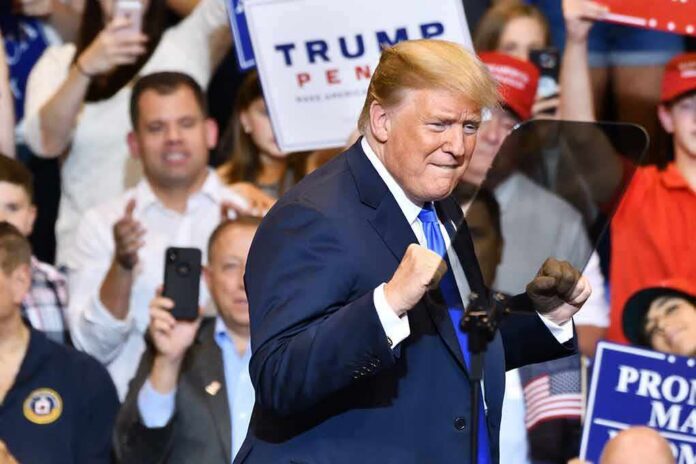
President Trump launched an “Economic D‑Day” to choke Iran’s oil cash, weapons pipelines, and nuclear procurement networks through the most aggressive sanctions push to date.
Story Highlights
- The White House restored maximum pressure and ordered sweeping sanctions enforcement across energy, shipping, and finance.
- The Treasury Department targeted shadow fleets, oil sales, and weapons procurement nodes tied to missiles and drones.
- Officials say the campaign aims to cut off funds that fuel Iran’s nuclear and military programs.
- Tehran rejects talks under pressure and calls the measures illegal, but the U.S. says the focus is stopping a nuclear weapon.
White House Orders Maximum Economic Pressure On Iran
The White House issued a national security directive restoring maximum pressure on Iran and ordering strong sanctions enforcement. The order directs the Secretary of the Treasury to impose maximum economic pressure, warn global shippers and insurers, and ensure ports and energy firms understand the risks of violating sanctions. Reuters reported the goal includes cutting Tehran’s oil exports toward zero to block funds for a nuclear weapon. The guidance signals a whole‑of‑government push to starve the regime’s cash flow and curb its reach.
The directive frames the campaign as an economic operation that is broader than past efforts. It tasks agencies to close gaps that let Iran move oil and money across borders. It also pairs penalties with clear risk notices to firms that touch cargo, finance, and insurance tied to Iranian trade. The intent is simple: raise the cost of doing business with Tehran so high that networks dry up. Officials argue this reduces danger to U.S. troops, allies, and global shipping lanes.
Treasury Targets Oil, Shadow Banking, And Weapons Pipelines
The Department of the Treasury’s Office of Foreign Assets Control announced sanctions on more than 30 actors moving illicit Iranian oil and backing missile and advanced weapons work. Additional actions hit individuals, entities, and aircraft in Iran, Türkiye, and the United Arab Emirates that procured or moved parts for missiles and drones. These steps aim to break the links that let Iran buy sensitive technology and sell oil off‑book, then recycle that money into weapons programs.
Officials also flagged the regime’s “shadow fleet” of disguised tankers and front companies that shift sanctioned crude through complex routes. Treasury statements say the economic campaign seeks to constrict those networks and limit Tehran’s access to dollars and components that power its military build‑up. Reuters reported new penalties on shadow banking facilitators moving billions through hidden channels, reflecting a focus on the money men behind the schemes. The message is that no node is safe when it feeds Iran’s war chest.
Stated Goal: Deny Cash For A Nuclear Weapon And Regional Aggression
Administration statements tie the sanctions to a clear aim: stop Iran from getting the money and parts it needs to build a nuclear weapon or expand missile forces. The Treasury Department linked recent designations to blocking nuclear‑related procurement and warned that the regime’s pursuit of nuclear arms will face financial roadblocks at every turn. A separate Treasury release said the “Economic Fury” effort is putting a financial stranglehold on the regime to curb its aggression and nuclear ambitions.
This approach reflects a conservative principle: use U.S. economic strength instead of sending American troops into harm’s way. By focusing on oil exports, front companies, and shipping insurance, the policy seeks to make every barrel and every payment traceable and risky. Officials argue that shrinking Iran’s revenue reduces its ability to arm proxy groups that attack allies and target U.S. interests. The campaign also signals resolve to partners who count on American leadership in keeping sea lanes open and stable.
Iran’s Pushback And The Debate Over Efficacy
Iran’s leaders rejected the policy and refused direct talks while pressure continues. BBC reported that Iran’s president called the measures unfair and illegal, and said Iran does not recognize them. Al Jazeera quoted Iran’s foreign minister saying direct negotiations with the United States are not an option under maximum pressure. These statements show Tehran wants relief without giving up leverage, which is why the administration is tightening enforcement rather than easing off.
⚡ **𝗧𝗥𝗨𝗠𝗣 𝗗𝗘𝗖𝗟𝗔𝗥𝗘𝗦 "𝗘𝗖𝗢𝗡𝗢𝗠𝗜𝗖 𝗗-𝗗𝗔𝗬" 𝗔𝗚𝗔𝗜𝗡𝗦𝗧 𝗜𝗥𝗔𝗡
📢 "Today, I am announcing the MOST CRUSHING ECONOMIC OPERATION EVER TAKEN AGAINST ANY COUNTRY! This will be Economic Warfare and Isolation on an unprecedented scale," Trump wrote on Truth… pic.twitter.com/XYsZ0Nolxz
— Vortex Report (@VortexReportX) August 20, 2026
Analysts have long debated whether sanctions alone can force strategic change. Brookings wrote that sanctions impose heavy costs but may not on their own convince Iran to abandon nuclear ambitions. Supporters of the new drive say the answer is stronger, smarter enforcement that closes evasion routes and raises real costs for buyers, shippers, and banks. That is what the current orders and designations aim to do: make cheating harder, costlier, and riskier day by day.
Sources:
nypost.com, home.treasury.gov, whitehouse.gov, reuters.com, moderndiplomacy.eu, defensepriorities.org