
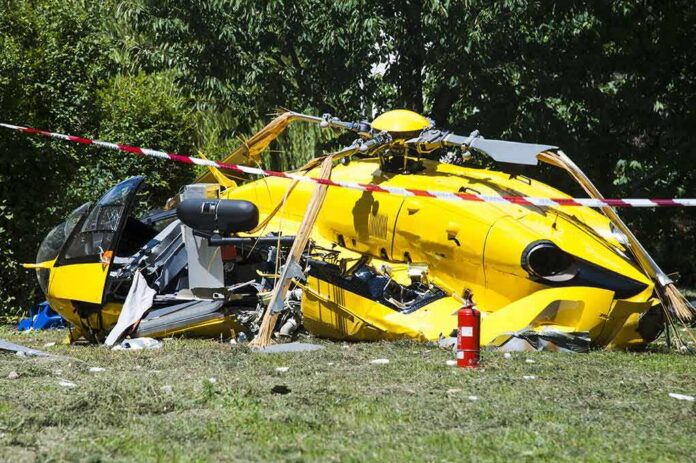
NBC4 confirmed live on air that its NewsChopper 4 crashed in Chatsworth, killing three people as crews worked a separate deadly bus collision nearby.
Story Snapshot
- NBC4 said it lost contact with its helicopter, later confirming NewsChopper 4 went down near 7 p.m. in Chatsworth.
- The crash killed two station crew members and one person on the ground, according to local reports citing fire officials.
- The helicopter was covering a fatal bus crash at Nordhoff Street and De Soto Avenue when it went down.
- Federal investigators from the National Transportation Safety Board and the Federal Aviation Administration are expected to review the crash.
What Happened In Chatsworth
On Monday evening in Chatsworth, NBC4’s NewsChopper 4 crashed close to commercial buildings near the 9100 block of Mason Avenue, shortly before 7 p.m. local time. On air, anchor Colleen Williams told viewers the station had lost contact with its crew and later confirmed the helicopter was their aircraft. Local outlets reported three people died, including two station employees on board and one person on the ground. Authorities secured the scene as firefighters and police already worked a nearby bus crash.
Reporting from the scene stated the helicopter had been covering a deadly bus collision at Nordhoff Street and De Soto Avenue. That separate crash involved an sport utility vehicle and a Metro bus and left at least two people dead and several others hurt, according to officials quoted by local media. The helicopter and bus incidents were close in time and place, but coverage did not link one as the cause of the other. First responders managed two complex emergencies in the same neighborhood.
Victims And On-Air Confirmation
NBC4 identified the two crew members on board as reporter Eliana Moreno and pilot George Marciniw in a tribute segment and follow-up coverage. Viewers heard the newsroom process the shock in real time as anchors shared that contact had been lost with the helicopter before confirmation of the crash aired. The human toll extended to the street below, where one person also died. The station and local officials shared condolences as families and colleagues faced sudden loss.
Station updates and local partners placed the crash near 6:57 p.m., aligning with a tight response window for police and fire units already deployed for the bus wreck. That overlap eased access to medical support but also added strain to traffic control and scene safety. Officials asked the public to avoid the area and allow investigators and recovery teams to work. Early reports did not list survivors. Authorities did not name the third victim pending family notice.
What Investigators Will Examine
Federal safety teams from the National Transportation Safety Board and the Federal Aviation Administration typically handle fatal aviation probes. Local reports said both agencies were expected to be involved in this case. Investigators will map debris, study weather, review maintenance and pilot records, and look for flight data or cockpit audio if any devices were installed. The National Transportation Safety Board database will later host a preliminary report with early facts. A full report often takes months.
Past reviews of news-helicopter crashes show many causes, including operational choices and distractions during live events. The 2007 Phoenix midair collision, which killed four journalists, highlighted how task loading while reporting can raise risk. That history explains why federal teams resist early guesses and instead build a timeline from radio logs, radar tracks, and witness accounts. In Chatsworth, officials said the cause was not yet known in initial reporting, and they urged patience as evidence is gathered.
Two Crises In One Neighborhood
The bus crash drew large emergency responses after an sport utility vehicle hit a Metro bus at Nordhoff and De Soto, leaving at least two dead and others injured, according to local outlets citing police and fire officials. The scene involved rescuers, investigators, and traffic closures even before the helicopter fell. That density of activity can complicate communications and cordons. It also leaves residents shaken as sirens, lights, and detours stretch into the night while teams secure hazards.
An unimaginable tragedy struck Chatsworth, CA as NewsChopper 4 went down while covering a deadly Metro bus crash, taking the lives of aerial reporter Eliana Moreno, pilot George Marciniw, and a bystander on the ground.
Across both incidents, five lives were lost and several…
— DaShawn (#219BarbieShawny) (@BadLikeNicki) September 17, 2026
Communities expect fast, safe coverage of major events. Journalists also expect to come home. When a news aircraft goes down while telling a public safety story, it exposes a hard truth: the work that keeps us informed carries real risk. People across the political spectrum share anger when systems fail, and they demand clear answers. Federal investigators and city agencies now owe the public a fact-based account so lessons are learned and safety improves for crews in the air and people on the ground.
Sources:
scmp.com, hindustantimes.com, cbsnews.com, kcra.com, sherafy.com, patch.com, abc7.com