
Dozens of Nigerian families are finally hearing their loved ones’ voices again after months of jihadi captivity and state rescue operations that exposed both the brutality of the kidnappers and the scale of the country’s security crisis.
Quick Take
- Security forces rescued **308 abducted people** in northern Nigeria after a joint operation.
- The freed victims included people taken from **Kwara State** and **Niger State**.
- Another report said **360 captives** were freed from a Boko Haram hideout in Borno State.
- Survivors were taken for **medical evaluation** before family reunification.
Rescue Operations Put Pressure on Kidnap Networks
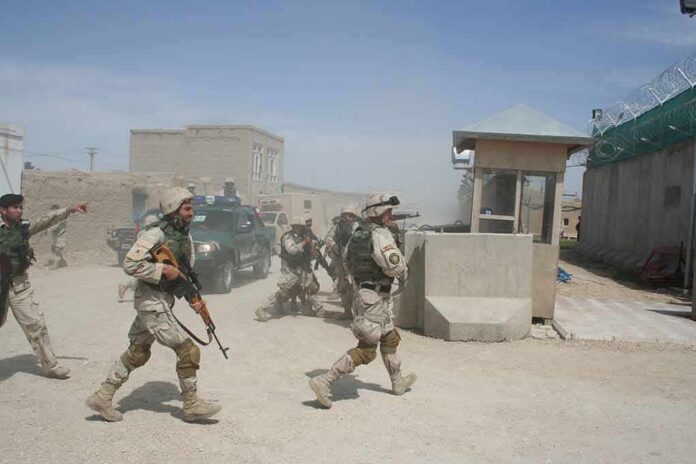
Nigerian security forces rescued 308 people abducted in separate attacks in northern Nigeria, President Bola Ahmed Tinubu said in a statement. Reuters reported that 163 of the freed victims were taken from Woro community in Kwara State and 145 from Niger State, with all of them found in the Kainji Lake National Park forest after a coordinated, intelligence-driven operation. Officials said the survivors were receiving medical care before reunification with their families.
The rescue matters because it shows the state still has some reach in a region where kidnappers and armed groups have terrorized civilians for years. Tinubu called it the largest same-day hostage recovery in the country’s history, and several outlets echoed that description. For ordinary families, the main issue is simpler: people who were held for months are now alive, back in government custody, and moving toward home.
Freed Victims Describe Months of Fear and Suffering
Some of the rescued Nigerians said they lived through six months of hunger, fear, and abuse. Reporting from the Associated Press described survivors, mostly women and children, speaking about death and suffering during captivity, which matched earlier accounts from other freed hostages who said militants kept them in harsh and degrading conditions. That testimony gives the story its human weight and confirms the rescue was not just a press release.
Fox News reported that the Kwara victims had been held since a deadly February raid, and that kidnappers killed many others during the original attack. That detail is important because it reminds readers that every rescue comes after a failure of order that should never have happened in the first place. Nigerians are not asking for slogans. They want safe villages, strong borders against armed gangs, and a government that can protect families before tragedy strikes.
Competing Reports Show Why the Details Matter
The wider record is messy. BBC reported that at least 360 people kidnapped by Boko Haram in Borno State were freed from a mountain hideout, but it also said the circumstances were disputed. The army said it had carried out an intelligence-led operation, while a local group claimed it mediated the release and put the number higher. That is a reminder that rescue headlines can be real even when the exact method is not fully clear.
More than 160 hostages freed by Nigerian forces reunite with their families. @AJEnglish's @Ahmedtj66 went to their village after they were taken and is there with them after their rescue. Incidents like these are on the rise in #Nigeria https://t.co/WljsmRgGI8
— Colin Baker (@airlockben) August 9, 2026
That pattern matters for readers who want facts, not spin. Multiple outlets confirmed the release of more than 300 hostages in one operation, and separate reporting confirmed another large rescue of captives in Borno. The open questions are about the route to freedom, not whether families were reunited or whether these Nigerians endured months in militant hands. The government says the survivors are now under care and on the way back to their communities.
What the Rescue Signals for Nigeria’s Security Fight
The rescue highlights both progress and weakness in Nigeria’s fight against armed groups. Security forces can still mount large operations, but the need for repeated mass rescues shows how deep the kidnapping problem runs across the country. Reports cited joint action by the armed forces, police, intelligence units, and counterterrorism teams, which suggests the state is relying on coordinated force rather than a single agency response.
For conservatives watching from the United States, the lesson is familiar: when government loses control of territory, criminals and extremists fill the gap. Nigeria’s latest rescue shows that forceful action can save lives, but it also shows the cost of delayed security and weak deterrence. The freed victims are now headed toward family reunification, but the broader fight against jihadi violence, kidnappings, and lawless zones is far from over.
Sources:
military.com, bbc.com, theguardian.com, pbs.org, reuters.com, ajc.com