

As Vladimir Putin openly thanks North Korea for helping fight Ukraine, two nuclear-armed dictatorships are knitting together a war partnership that should worry anyone who thinks ordinary people, not elites, ought to decide the future of their countries.
Story Snapshot
- Putin met North Korea’s foreign minister at the Kremlin and praised Pyongyang’s military support for Russia’s war in Ukraine.
- Western and South Korean officials say North Korea has sent thousands of troops and huge stockpiles of weapons to Russia, especially around the Kursk region.
- Russia and North Korea have signed a formal partnership pledging mutual military aid if either faces “aggression,” tightening an authoritarian military bloc.
- Moscow and Pyongyang still deny or blur key details, leaving citizens in the dark while intelligence agencies and state media control the story.
Putin’s Kremlin Meeting Signals Deeper War Cooperation
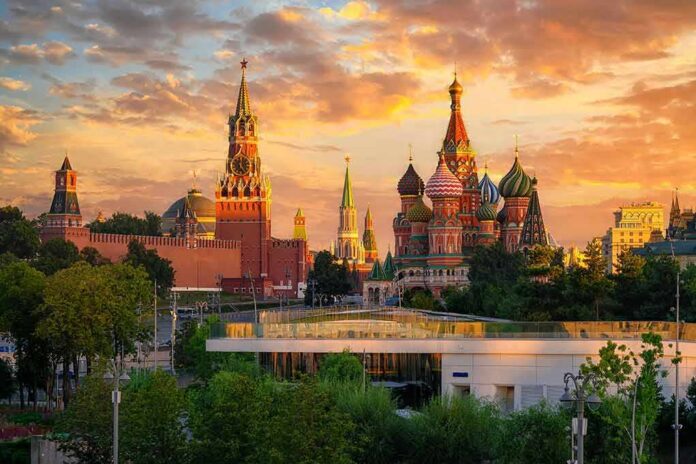
Russian President Vladimir Putin met North Korean Foreign Minister Choe Son-hui at the Kremlin, the latest in a string of high-level talks between the two isolated governments. During the meeting, Putin thanked North Korea’s leadership and people for backing his “special military operation” against Ukraine and praised their support as a sign of strong bilateral ties. Russian outlets described the talks as friendly and strategic, focused on deepening cooperation, but offered few specifics, underscoring how much war policy now happens behind closed doors, far from public scrutiny.
North Korean and Russian state media framed the visit as proof that their relationship is “developing as planned,” suggesting long-term coordination rather than one-off help. North Korea’s government has made Russia the main target of its foreign policy, with analysts saying Pyongyang now sends manpower and weapons to Moscow in exchange for food, energy, money, and advanced military technology. That bargain strengthens both regimes, even as their own citizens face economic hardship and have little say in decisions that could drag them into wider wars.
Thousands of North Korean Troops and Weapons Flow to Russia
United States officials say about 10,000 North Korean soldiers have been dispatched to Russia, with roughly 8,000 stationed in the Kursk region, where Russian forces fought off a major Ukrainian incursion in 2024. South Korean assessments put the total even higher, around 14,000 soldiers sent under a mutual defense pact, many reportedly fighting alongside Russian troops in Kursk. Western reports add that North Korea has shipped artillery, ballistic missiles, anti-tank rockets, and millions of rounds of ammunition to feed Russia’s war machine, despite United Nations sanctions meant to stop exactly this kind of arms trade.
Russian and North Korean officials have long dodged direct confirmation of troop numbers, insisting that their military cooperation follows international law while refusing to release hard data or evidence. Yet Russia’s own media now state that North Korean troops “helped Russia repel” the Ukrainian attack in Kursk, and independent reporting notes that Pyongyang has publicly acknowledged its military’s role in recapturing the region after Ukrainian gains. These claims suggest that, even while elites argue over legal terms and spin the narrative, North Korean soldiers are already bleeding and dying on Russian soil for a war their citizens never voted on.
A Formal Mutual-Aid Pact Cements an Authoritarian Bloc
Earlier in 2024, Putin and North Korean leader Kim Jong Un signed a Comprehensive Strategic Partnership Agreement that pledges mutual aid if either country faces “aggression.” The pact covers security, trade, investment, and cultural ties, but its most important piece is the promise of military support, including possible “military-technical cooperation” that could boost North Korea’s nuclear and missile programs. For many Americans who already mistrust global institutions, this looks like another elite-driven deal that increases danger abroad while doing nothing to lower prices, fix schools, or secure the border at home.
Washington and Seoul accuse Pyongyang of already sending more than 11,000 containers of munitions and dozens of ballistic missiles to Russia. In return, North Korea is believed to receive economic assistance, energy supplies, and technology that helps Kim tighten control and expand his weapons arsenal. This fits a broader pattern researchers have found: authoritarian states trade military support with one another to keep their regimes alive, even as ordinary people in all countries worry about jobs, inflation, and basic freedoms that seem to matter less than geopolitical games.
Information Gaps Feed Public Distrust on All Sides
Western media and governments now speak of “growing concern” over North Korean troops in Russia, yet much of what the public hears comes from unnamed intelligence sources rather than open evidence or field reporting. At the same time, Moscow and Pyongyang tightly control their own narratives, praising “heroic” North Korean soldiers and strategic unity while avoiding clear numbers, locations, or casualty figures. This mix of secret intelligence, closed-door diplomacy, and state propaganda leaves citizens in the United States, Europe, Russia, and Korea guessing about the true scale of the alliance.
North Korea foreign minister met Russian President Putin in Moscow on July 19: KCNA
— FinancialJuice (@financialjuice) July 20, 2026
For Americans on both the right and the left who already feel abandoned by their own leaders, this story hits familiar nerves. Two authoritarian governments quietly expand a war partnership that could destabilize Europe and Asia, while Washington’s response is shaped by agencies and contractors that many believe profit from endless conflict. Conservatives see another example of globalist entanglements and weak borders; liberals see more military spending and less help for the poor. Both sides see elites treating transparency as optional, even when nuclear-armed states are moving troops and missiles across borders.
Sources:
military.com, aa.com.tr, themoscowtimes.com, internazionale.it, anews.com.tr, en.kremlin.ru, abcnews.go.com, cfr.org