

A Louisiana grand jury declined to indict a former North Carolina police officer accused of plotting a racially targeted mass shooting tied to New Orleans festival crowds, leading to his quiet release.
Story Snapshot
- Grand jury declined to indict after high-profile arrest and seizure of gun and ammo.
- Officials earlier alleged a plan to target Black people and provoke “suicide by cop”.
- Deputies found a handgun and about 200 rounds in a Florida hotel room.
- Key records like the Louisiana warrant and grand jury details remain sealed or undisclosed.
Arrest Tied to Alleged Festival Plot and Racial Targeting
Authorities in Florida arrested former Chapel Hill officer Christopher Gillum on a Louisiana warrant that alleged terroristic threats tied to a planned mass shooting aimed at festival crowds in New Orleans. Reports said investigators received information that he intended to target Black people and then force a deadly confrontation with police. The timing aligned with the city’s major spring festivals, including Jazz Fest, which draws large crowds and heavy security each year.
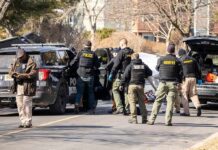
Deputies located Gillum at a hotel in Destin, Florida, after checking county Flock camera data, which is a license-plate reader network used for criminal investigations. Investigators said they recovered a handgun and roughly 200 rounds of ammunition in his room. Officials booked him as a fugitive from justice pending extradition to Louisiana. Media described Gillum as a former North Carolina officer, a detail that raised concern about tactical knowledge if a plot moved forward.
Grand Jury Declines Indictment; Suspect Released
A Louisiana grand jury later refused to indict, and Gillum was released from custody, according to accounts that followed the arrest. Law enforcement agencies did not immediately publish the grand jury record or offer a detailed explanation of the evidence considered. That outcome marked a sharp turn from the early public warnings and raised difficult questions about what investigators could prove under oath beyond the initial probable-cause narrative reported in April.
Officials and media initially stressed urgency to protect crowds, which is common in threat-disruption cases. In such cases, police must move fast on tips, travel patterns, and weapons access to prevent harm. That approach can save lives, but it also means early facts often come from partial information. Later, prosecutors must meet a higher legal bar in front of a grand jury. Sometimes that bar is not met even after a dramatic arrest.
What We Know, What We Do Not, and Why It Matters
Public reporting cites a family warning about threats toward Black people, travel toward Louisiana, and a stated wish to provoke police into a fatal response. Those points were repeated across several outlets after the arrest. However, the record we can see does not include the full Louisiana warrant, the probable-cause affidavit, or any digital trails that would detail specific plans, maps, or messages. Without those filings, the public cannot see how strong the case was inside the courtroom.
Ex-Cop Accused of Plotting to Kill Black People in Mass Shooting at New Orleans Jazz Fest QUIETLY RELEASED After Grand Jury Refuses to Indict — Law Enforcement NOT Aware of His Release https://t.co/Uz2rnxBXrz
— Svein (@svein_hh) August 13, 2026
For readers who value safety, due process, and equal justice, two truths can stand together. Police must act fast when there is a credible threat to innocent people. Prosecutors must then prove facts to a legal standard. The grand jury’s decision ends this phase without charges, but it does not answer every question. Officials can still release non-sensitive records that explain the steps taken and help the public understand why the case ended where it did.
Sources:
thegatewaypundit.com, youtube.com