

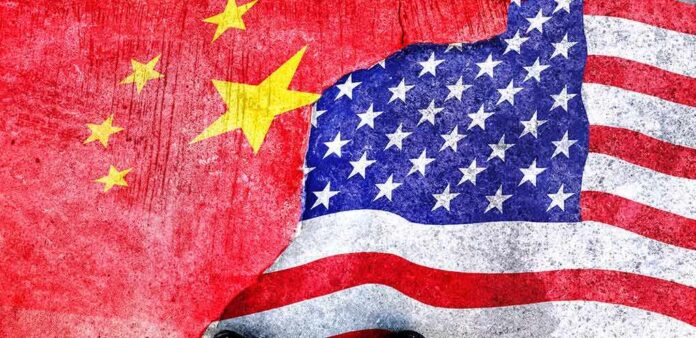
A major regional survey says more Latin Americans now see China as a positive influence than the United States for the first time since 1995, signaling a wake-up call for Washington’s outreach in our own hemisphere.
Story Highlights
- Latinobarómetro finds 65% rate China’s influence positive, 57% say the same for the United States
- China’s score jumped since 2020 while the United States slipped, producing a crossover
- United States still leads on overall favorability, showing opinions split by measure
- Only Costa Rica and the Dominican Republic buck the regional pattern favoring China
Survey Shows China Overtaking United States on “Positive Influence”
Latinobarómetro’s 2026 regional survey reports that 65% of people across 17 Latin American countries view China as a positive influence, while 57% say the same about the United States, marking the first time China has led this measure since the series began in 1995. Reported methodology cites roughly 19,200 face-to-face interviews, giving the finding regional weight. Coverage notes the shift reflects a clear crossover, not a tie. Two countries, Costa Rica and the Dominican Republic, stood as exceptions.
Comparisons with 2020 underscore the trend. China’s positive-influence score rose from 48% to 65%, a sharp gain that suggests sustained outreach and visibility. The United States declined from 60% to 57% over the same period, which helped produce the crossover. The survey and reports separate “positive influence” from “favorability.” On overall favorability, the United States still leads, with some coverage placing it at 63% versus 58% for China, underscoring that influence and likeability are not the same.
What “Influence” Means, And Why It Matters Now
Survey coverage and expert context stress that people often judge economic ties, general favorability, and geopolitical influence as different things. That helps explain why China can lead on perceived influence while trailing on favorability. In recent years, China expanded trade, built infrastructure, and offered financing in the region, boosting its profile. At the same time, views of the United States have softened in several countries, narrowing gaps across measures and setting the stage for this year’s crossover on influence.
The broader pattern shows convergence rather than a sudden flip. Pew Research Center reporting this year found views of the United States declined in several Latin American countries while views of China mostly held steady, bringing the two closer on some metrics. The Latinobarómetro result fits that arc: influence now tilts to China, while the United States still holds an edge on overall favorability. That split matters for policy. Soft power wins when people feel present help in daily life, not only long-standing goodwill.
Regional Exceptions and What They Signal for U.S. Policy
Only Costa Rica and the Dominican Republic were named as countries where the United States still rated as a more positive influence than China, according to reports summarizing the survey. Those outliers may reflect specific trade ties, security cooperation, or development projects that communities feel on the ground. The lesson travels: when people see clear benefits tied to the United States—jobs, roads, reliable energy, lawful migration channels—they respond. When they do not, other partners fill the space.
China is perceived more positively as a global influence than the United States in Latin America, according to a new regional survey, in a first since the poll began in 1995.#China #ChinaPoliticshttps://t.co/KTVOHQODLe
— chinaspotlight (@chinaspotlight1) October 3, 2026
The Trump administration faces both a challenge and an opening. The challenge is clear: a key barometer in our neighborhood now credits Beijing with more positive influence. The opening is also clear: the United States still leads on overall favorability, meaning trust and affinity remain strong. Targeted actions can convert that goodwill into visible gains. Faster delivery on energy projects, ports, and digital infrastructure can meet daily needs and counter Beijing’s pitch with real results people can see.
What Comes Next: Turning Favorability Into Real Influence
Policy should focus on outcomes families feel: stable power, lower costs, safe streets, lawful work opportunities, and transparent investment. That means aligning aid and finance tools with local goals and guarding against corruption. It also means keeping our values front and center—free speech, faith, family, and the rule of law—while respecting each nation’s sovereignty. When the United States backs local choice and delivers quick, honest projects, influence follows, and pressure from authoritarian models fades.
The survey is broad and reputable in scope, but full questionnaires and country tables were not provided in the reports, limiting fine-grain analysis here. Even so, the headline stands across multiple outlets: China now leads on perceived positive influence, a first in three decades of tracking. For conservatives, the takeaway is practical, not pessimistic. Our hemisphere still knows and likes America. Now Washington must match words with deeds, secure our backyard, and prove—project by project—why free nations lead best.
Sources:
feedpress.me, aljazeera.com, ropercenter.cornell.edu