
Bill Gates says artificial intelligence could help trigger a pandemic “significantly worse than Covid,” and he’s accusing Washington of dragging its feet on safeguards.
Quick Take
- Bill Gates warned at the Financial Times Future of AI Summit that AI could enable a pandemic worse than COVID-19.
- Gates said AI can scan software used by hospitals, power grids, and banks for weaknesses hackers could exploit.
- He criticized the Trump administration for slowing efforts to set up AI safeguards.
- Gates argues letting tech companies police themselves isn’t enough to manage the risk.
- Security researchers say AI is making existing cyber and biological threats faster and easier to carry out.
Gates Delivers a Stark Warning on AI and Disease
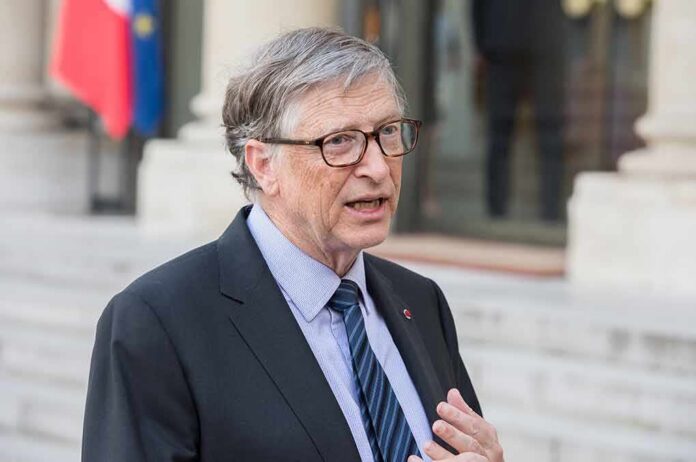
Bill Gates, the Microsoft co-founder, told the Financial Times Future of AI Summit that artificial intelligence could help someone unleash a pandemic far deadlier than COVID-19. “You could literally have something that is significantly worse than Covid,” Gates said during the interview, which aired as part of the Financial Times’ Tech Tonic podcast. He tied the danger directly to AI’s growing ability to assist with biology.
Gates has not always sounded this alarmed. In 2023, he wrote that the risks of AI were “real but manageable.” Three years later, he says bad actors could use the technology to kill people on a massive scale, a shift that reflects how fast AI tools have advanced.
From Software Bugs to Power Grids
Gates pointed to a second danger beyond biology: hacking. He said AI systems can search for weaknesses in the software that runs hospitals, electricity networks, and banks, giving attackers a faster path into critical systems that keep daily life running. That combination, he argued, means AI isn’t just a tool for productivity. It’s also a tool that can find and exploit holes humans might miss.
Gates said relying on tech companies to regulate themselves won’t solve the problem. He called for governments to build stronger oversight and monitoring systems before AI’s capabilities outpace the world’s ability to respond. He also said a simple “kill switch” for dangerous AI systems would not be enough protection on its own.
Gates Blames Washington for Slow Action
Gates accused the Trump administration of slowing down efforts to protect the country from AI-related risks, saying inaction leaves the world exposed to AI-assisted bioweapons. His comments land amid a broader debate in Washington over how much the federal government should regulate fast-moving AI companies versus letting the industry grow with fewer rules.
That tension cuts across the usual left-right divide. Many conservatives worry that heavy-handed regulation could hand China and other rivals an edge in the AI race. Many liberals worry that unregulated AI companies, already criticized for data misuse and job losses, can’t be trusted to police themselves on matters of public safety.
A Familiar Pattern With New Tools
Researchers who study critical infrastructure say Gates’s warning fits a long-running pattern. Every wave of new technology has brought both promise and new attack surfaces, from the earliest days of internet-connected power systems to today’s AI tools. The core risk isn’t entirely new. What’s changing is the speed, scale, and reach that AI gives to both defenders and attackers.
Government watchdogs have flagged similar concerns. A federal order now requires agencies to evaluate and report yearly on AI risks facing critical infrastructure sectors, an acknowledgment that the threat is taken seriously inside government, even as debate continues over how fast and how far new rules should go.
Why This Resonates Beyond Tech Circles
Gates’s warning taps into a frustration shared by many Americans, regardless of politics: the sense that powerful new technologies are moving faster than the government’s ability, or willingness, to manage them. Whether the worry is a pandemic, a cyberattack on the power grid, or AI replacing jobs, the underlying question is the same. Can elected leaders act before a crisis forces their hand, or only after one hits?
ft.com, nytimes.com, markets.ft.com, inkl.com, cambridge.org, ijsrmt.com, wjarr.com