
Two journalists were wrongly swarmed by police after an AI-driven license plate camera treated a bad database entry as “evidence” — and Flock Safety now says the system worked exactly as designed.
Story Snapshot
- Flock Safety’s cameras flagged a Jaguar press vehicle as stolen, leading to coordinated police stops of two journalists.
- The company insists its AI matched “partial plates” per police preferences and that the system “performed as designed.”
- Flock claims high accuracy, yet internal numbers and outside studies show millions of misreads and repeated wrongful stops.
- Conservatives now face a growing mass-surveillance network that can get it wrong, while armed officers act on the alerts.
AI Camera Flags Journalists As Car Thieves
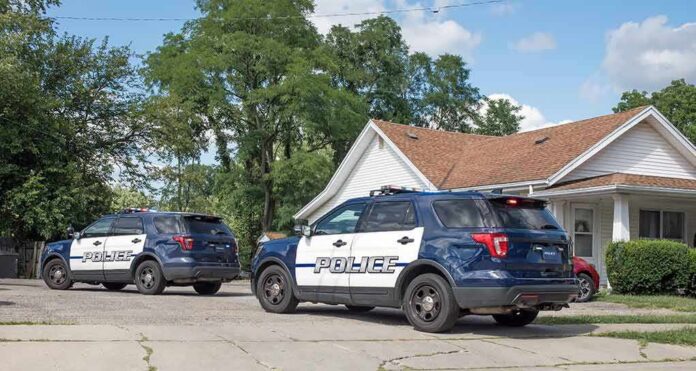
Automotive journalist Joel Feder and his wife were driving a Jaguar Land Rover press vehicle in Plymouth, Minnesota when police suddenly boxed them in. Multiple squad cars moved in after a Flock Safety automated license plate camera marked the car as stolen. The alert came from a “hot list” built off the National Crime Information Center database, which had an incomplete plate entered hundreds of miles away. That bad entry turned an innocent couple into suspects and set off a full police response.
Flock Safety later said its system did exactly what police asked it to do. Company spokesman Joshua Thomas explained that the cameras were configured to look for certain characters from that truncated plate, not the full number. When the Jaguar passed a camera, the system checked if those characters were present and answered “yes.” From Flock’s view, the alert was technically correct under the chosen settings, even though it pointed officers to the wrong vehicle and the wrong people.
Flock Calls Misread Alerts “Highly Accurate Data”
Flock Safety has tried to reassure the public that its technology is “highly accurate” and only meant to be one lead in a larger investigation. Thomas compared a camera alert to an alarm going off and stressed that “a camera alert does not equal probable cause.” Company materials promote accuracy figures in the 93% to 99% range. But even those numbers mean a built-in error rate that gets very dangerous once government puts this AI on nearly every road and feeds it into armed police patrols.
The scale makes the problem impossible to ignore. Thomas said Flock’s network now performs about 20 billion license plate reads every month. At 99% accuracy, that still produces around 200 million misreads in that same time span. Civil liberties researchers note that at 93% accuracy the total of wrong reads climbs into the billions. Many of those bad hits are never acted on, but more and more audits now show a steady stream of innocent Americans stopped, searched, or even held at gunpoint after a wrong camera alert.
Pattern Of Wrongful Stops And Local Backlash
Business Insider reviewed police records and lawsuits and found at least a dozen cases where Flock camera errors or poor officer verification led to innocent people being stopped at gunpoint, jailed, or even attacked by police dogs. In one Toledo case, a camera misread a “7” as a “2,” and the department later admitted it was “commonly known” inside that the Flock system often misreads plates. A 2021 study by surveillance firm IPVM reported a 10% error rate for Flock’s Falcon camera, contradicting the company’s sunny marketing claims.
Local audits tell the same story. In Oak Park, Illinois, about three million scans produced 42 alerts; 25 of those led to traffic stops, and 40% were later judged mistakes caused by bad data or officer error. A study cited by civil rights lawyers found that in some reporting periods, one-third or more of stops sparked by Flock alerts ended with drivers released once officers realized the data was wrong. The American Civil Liberties Union warns that one in ten plates scanned may be marked with the wrong state, adding yet another layer of risk for innocent drivers who happen to match a sloppy database entry.
Audit Logs, Misuse Cases, And Mass Surveillance Fears
Flock Safety points to its audit logs as proof the system supports accountability. The company says every search records who ran it, when, why, and what case it was tied to. Those logs have helped catch officers who abused access, including multiple Georgia cops accused of using cameras for personal reasons. But conservatives know better than to trust “after the fact” paperwork as a real safeguard when the core problem is giving government a live tracking grid on ordinary citizens’ movements.
Flock Safety Defends Cameras After AI System Triggers Wrongful Police Stops Of Two Journalists https://t.co/ddH8HaHtLI #Money #Finance #Economics #Market
— Alen Karabegovic (@AlenKarabegovic) July 19, 2026
Civil liberties groups describe Flock as a mass-surveillance network that lets police map people’s daily routines without a warrant. The American Civil Liberties Union reports that cameras can build “heat maps” of where a vehicle appears over a month of scans and link that to federal watchlists and the Federal Bureau of Investigation’s National Crime Information Center database. Some cities and departments are walking away. Los Angeles ended its contract after an audit found 161 innocent drivers wrongly investigated in just two months due to incorrect stolen-vehicle flags. For constitutional conservatives, these cases are a clear warning: when government and big tech join forces around always-on tracking, innocent people pay the price, while companies still insist the system is working “as designed.”
Sources:
zerohedge.com, remio.ai, datafordefenders.org, en.wikipedia.org, malwarebytes.com, wnd.com, businessinsider.com, gadgetreview.com, eff.org, aclu.org, classlawgroup.com, 404media.co, timesofindia.indiatimes.com, facebook.com